The Loyalty Paradox:
Keeping Talent Requires Something More
The Problem: Key Employees Are Silently Seeking More
While leaders focus on external market pressures, the data suggests a surprising retention challenge is quietly unfolding within their organizations.
This year’s Business Generosity Report reveals a critical paradox: the “satisfied but still searching” employee. These individuals may tell employers they love their jobs, but data confirms they are actively looking for something more.
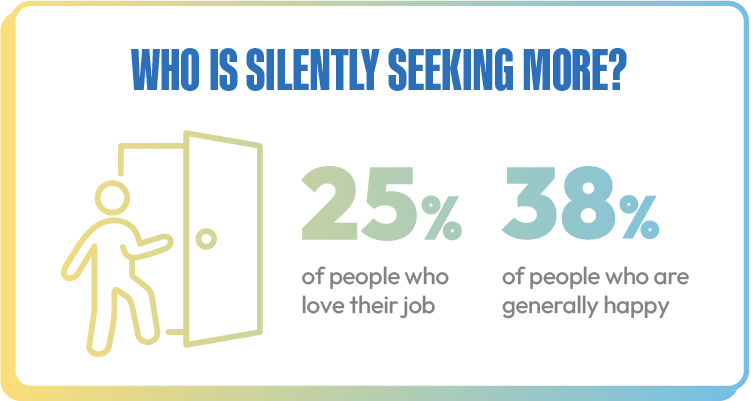
For business leaders trying to retain key employees it’s important to note that while 80% of Georgia employees say they are satisfied with their job, the data reveals that 37% are actually looking for something different, including the 25% who say they “absolutely love their jobs” and 38% who are “generally happy with their job.”
Although they might not find a new opportunity today, the data confirms they are driven to find purpose and generosity in an employer. Executives should be wary of assuming they know exactly what employees are looking for in a generous business. Data suggests they might have it wrong.
It seems counterintuitive that a quarter of those who report that they are happy in their jobs, would be exploring opportunities elsewhere. Ultimately, happiness doesn’t guarantee loyalty, but the data suggests that fulfilling their generosity requests might.
Employees Driven to Find a Generous Company
What motivates this “satisfied but still searching” behavior? The data reveals that regardless of how much employees might report liking their job, they are driven to find roles with generous companies—those that go beyond profit, operate ethically, and genuinely improve lives.
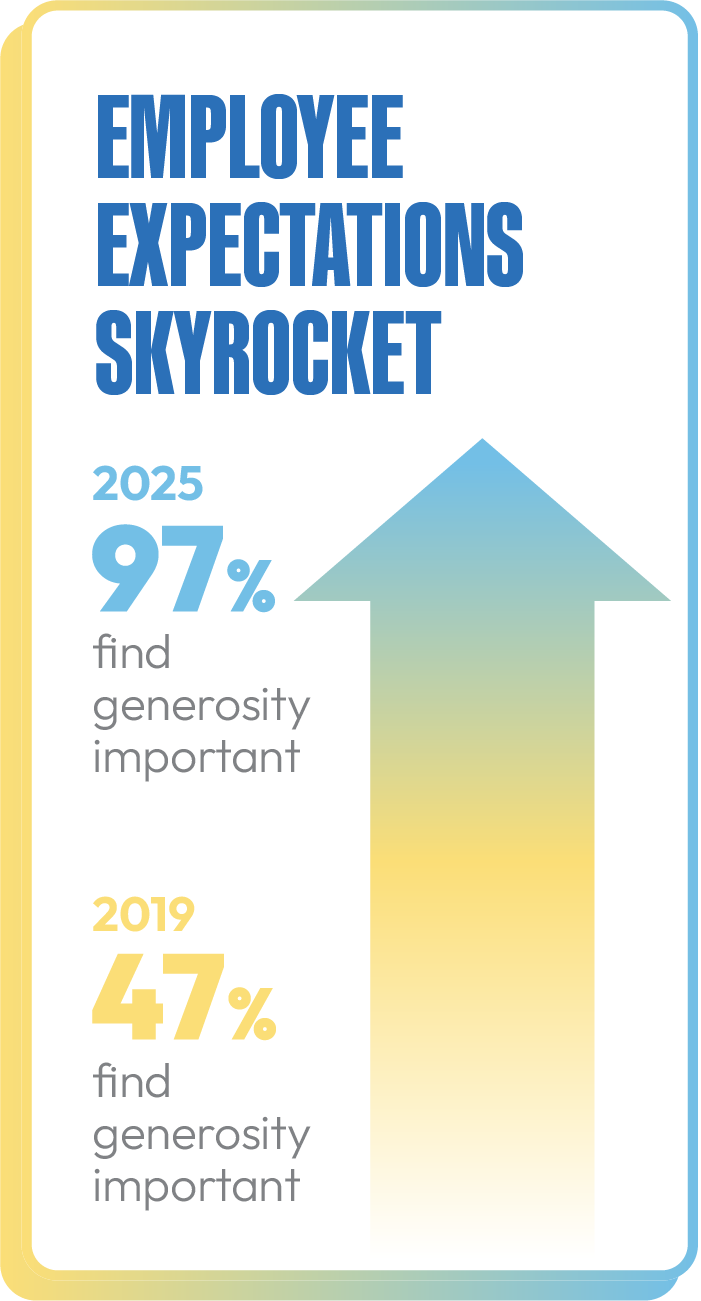
This is not a minor preference; the importance of business generosity has increased dramatically. In 2019, when goBeyondProfit first began tracking business generosity, only 47% of employees considered it important. Today, that number is 97%.
Not only do employees consider it important, but the percentage of individuals who consider generosity very or extremely important in their company has jumped to 79%—a sharp rise from just 20% in 2019. This aligns with the fact that 91% of employees agree that their company’s mission and purpose make their jobs feel important.
This increasing focus on generosity, purpose, and values reflects a significant shift over the past six years and presents an excellent opportunity for retaining talent. This is not merely a preference; it has direct and significant employment consequences. Executives who take note of this year’s data around the modern definition of generosity and understand what employee actually prioritize will have a distinct advantage over their competition.
This year’s data shows that 66% of employees have made career decisions based on a company’s generosity. More than 1-in-3 (35%) employees have actively sought jobs at generous companies, and a surprising 1-in-5 have taken pay cuts to work for companies they perceive as generous. We found that employees who say they are strongly connected to their company’s mission and purpose are much less likely (by 32 points) to look for a new job.
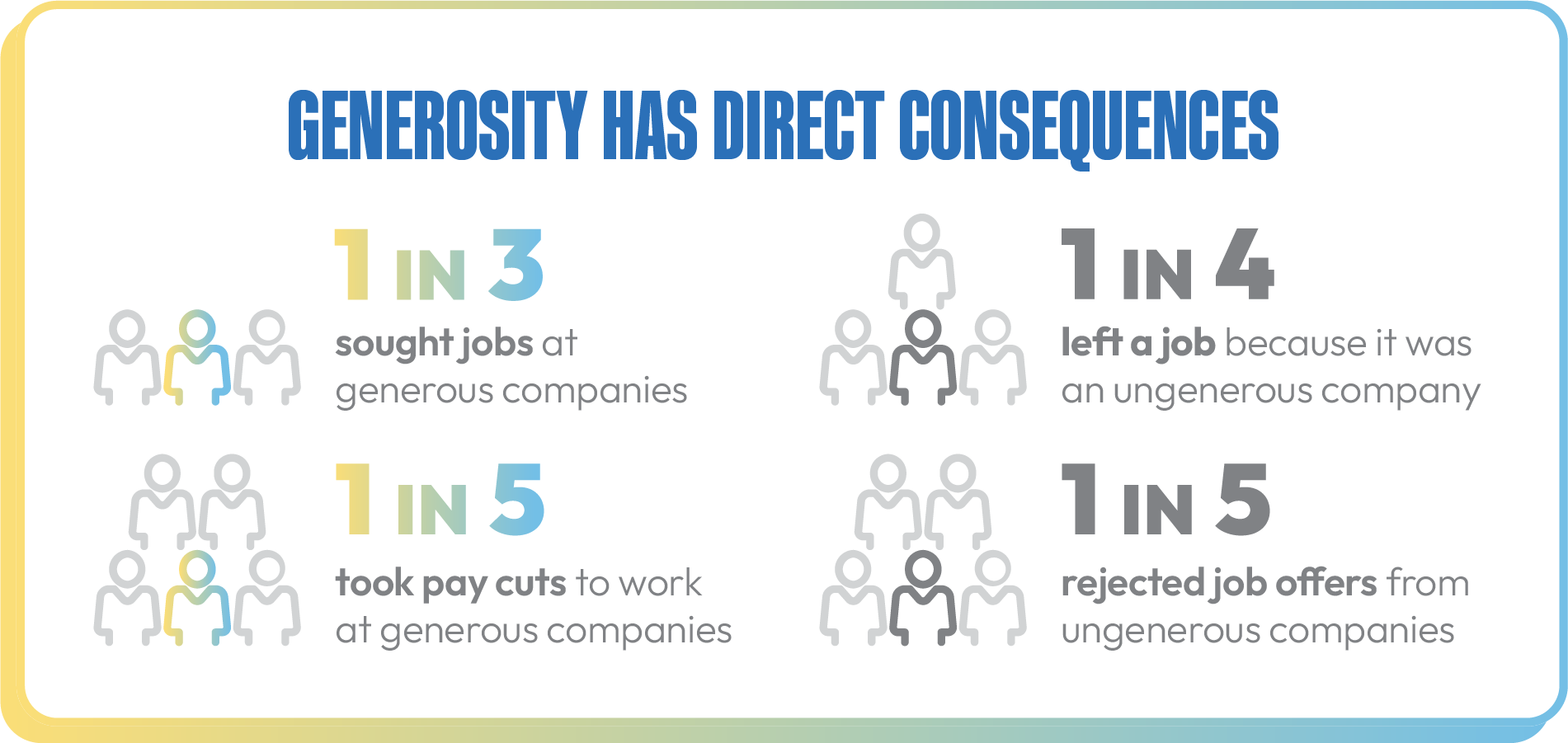
What might concern executives is that 1-in-4 have left a job because a company did not display generosity, and 1-in-5 have rejected a job offer from an ungenerous company.
The message is clear: These aren’t one-time decisions. People make generosity-based career moves repeatedly. Talent gravitates to businesses that get generosity right and companies that are deemed “ungenerous” risk losing key employees and paying more for their replacements.
Mounting Skepticism Among Employees Plays a Role
Our research offers insights into how Georgians view business in general and their employer specifically. The data reveals a concerning trend of increasing skepticism about whether businesses genuinely intend to do good.
Less than half (41%) of Georgians view business as a force for good— i.e. they make our lives better and create opportunities. Also, more than half (55%) of employees believe businesses have the capacity to do some good, but also some bad, and 4% even claim that businesses cause more harm than good in our communities. This reflects a general societal mistrust, consistent with findings from Gallup.
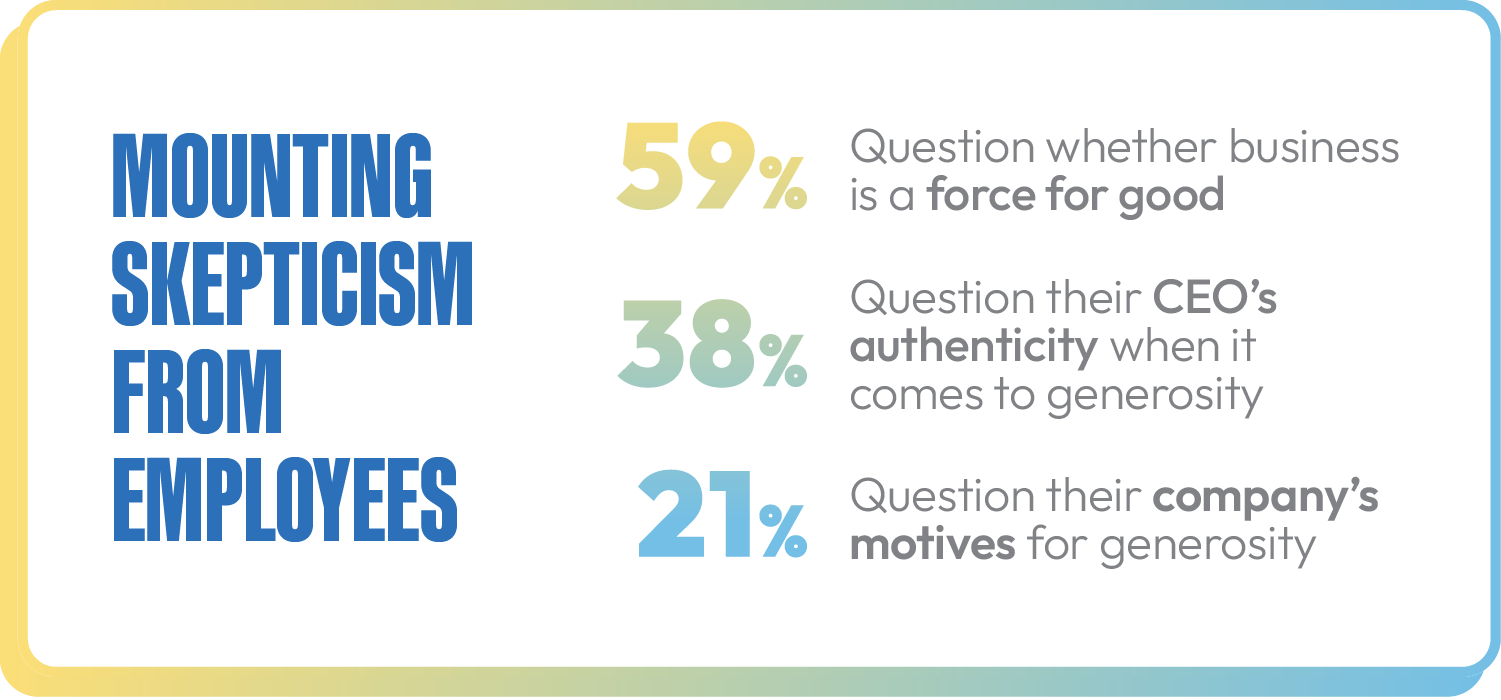
Adding to this dilemma, many employees appear skeptical of their own employers’ ability to be authentic in their generosity efforts. A significant 1-in-5 (21%) feel their employer’s generosity effort is just virtue signaling or politically motivated. Even more concerning, only 38% believe their CEO or executive leadership truly “walk the talk” by consistently demonstrating generosity.
This highlights mounting skepticism among employees, ultimately eroding the trust and loyalty many executives try to build through their generosity initiatives. Thankfully, this year’s data provides a clear path to bridge this gap.
Executives Report Record-Level Financial Investment in Generosity
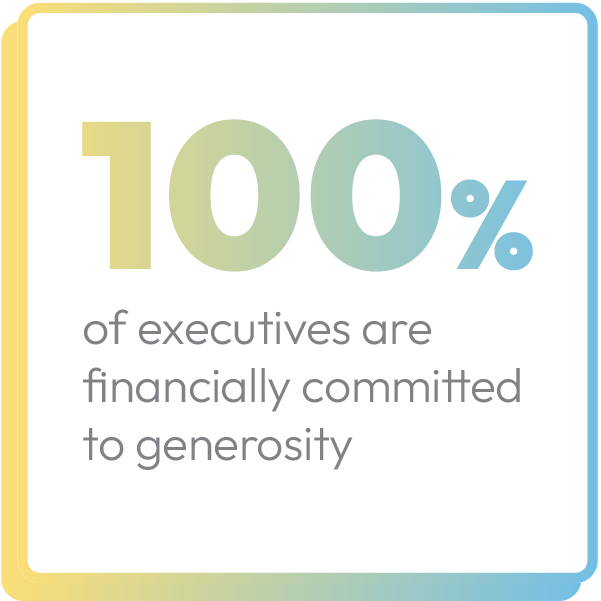
Notably, 2025 marks a watershed moment for Georgia executives. When goBeyondProfit started, our goal was to inspire business leaders to imagine the ways they could begin or expand their business generosity.
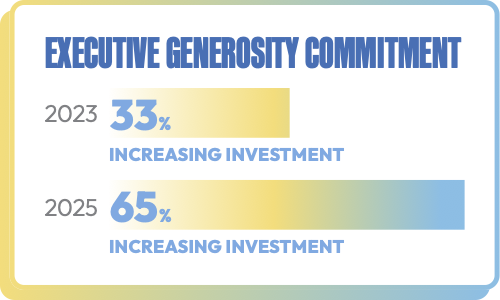
For the first time in the seven years of this survey, 100% of executives report being fully committed—either maintaining (35%) or increasing their financial investments (65%) in business generosity.
This marks a significant shift from 2023, when only 33% of Georgia’s executives planned to increase their generosity investments, with the majority planning to keep them the same (58%).
What is fueling this all-in attitude toward business generosity? Three-quarters (75%) of executives are increasing their investment because it is “simply the right thing to do.”
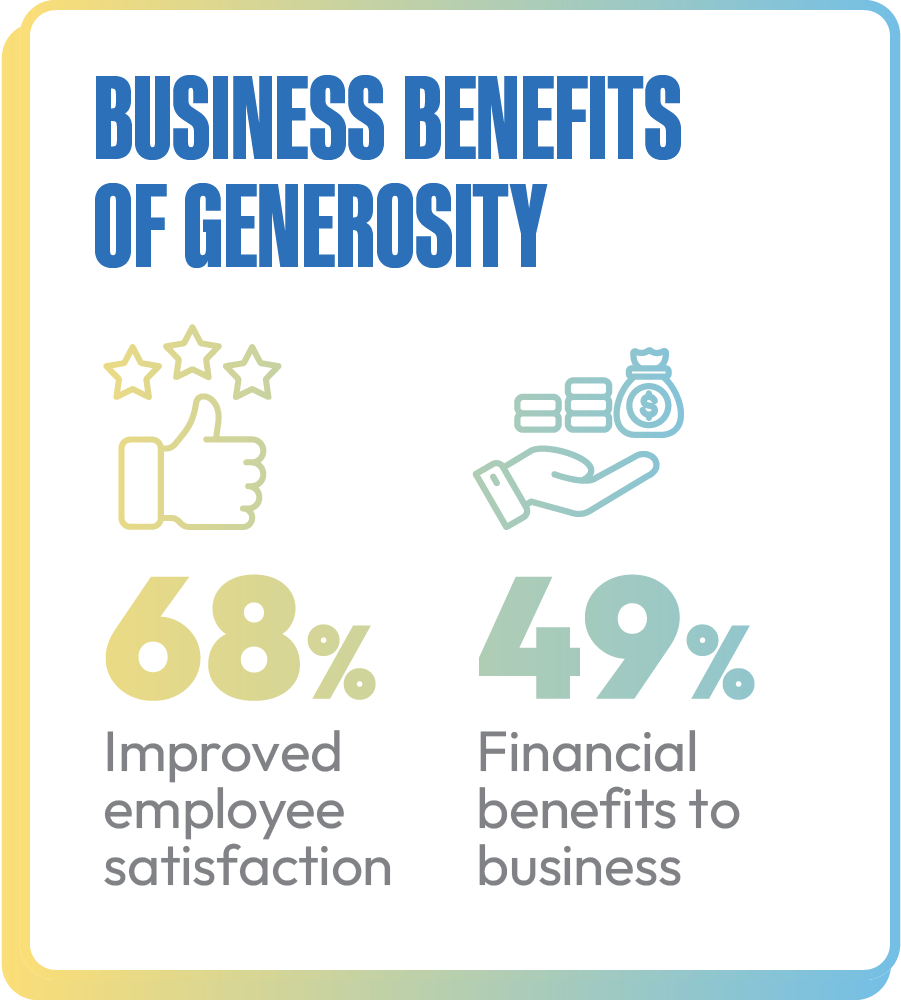
However, many also report clear positive business benefits, including improved employee satisfaction (68%) and direct financial benefits to their company (49%).
These strong positives align with the 30% of executives who state their rationale for merely maintaining their investments is simply due to current economic pressures, not a lack of commitment to generosity.
While business leaders understand the importance of business generosity, there remains a strong disconnect between this historic level of executive commitment and what motivates employees to stay or leave. To learn more, click here.
The Talent Solution: Align Generosity Strategy with Employees’ Definition
If executive financial commitment to generosity is at an all-time high and employees value generosity more than ever, where is the disconnect? This year’s report confirms that the definition of business generosity has fundamentally changed, and executives appear to be doubling down on strategies based on an outdated definition.
When asked what first comes to mind when considering business generosity, the contrast in responses between employees and executives was striking.
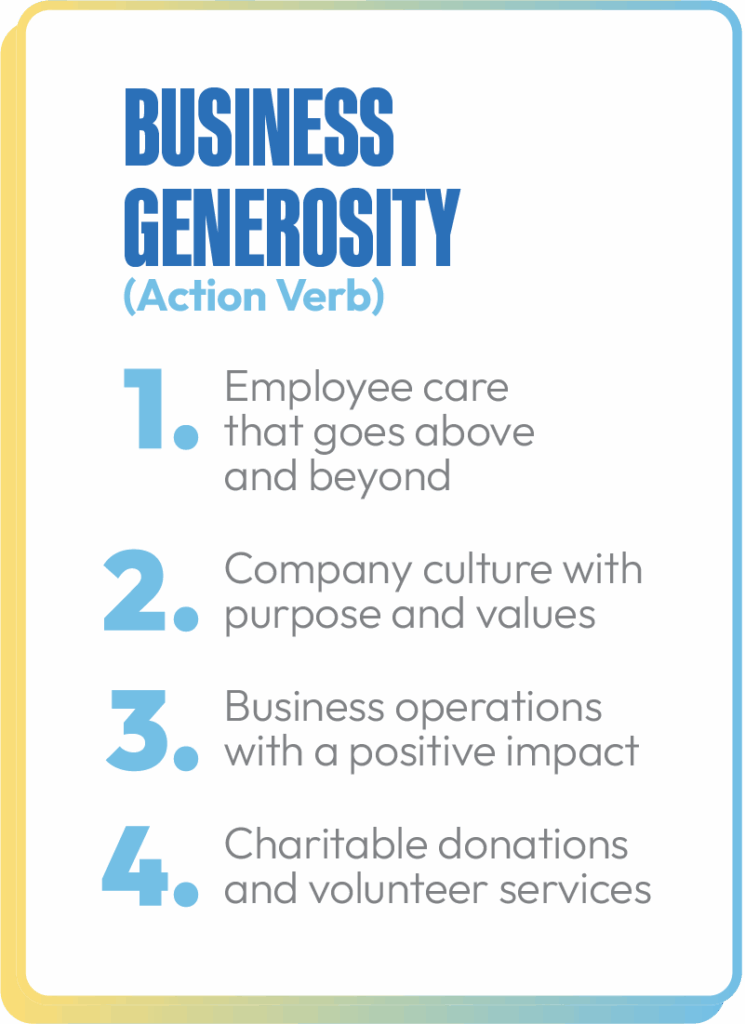
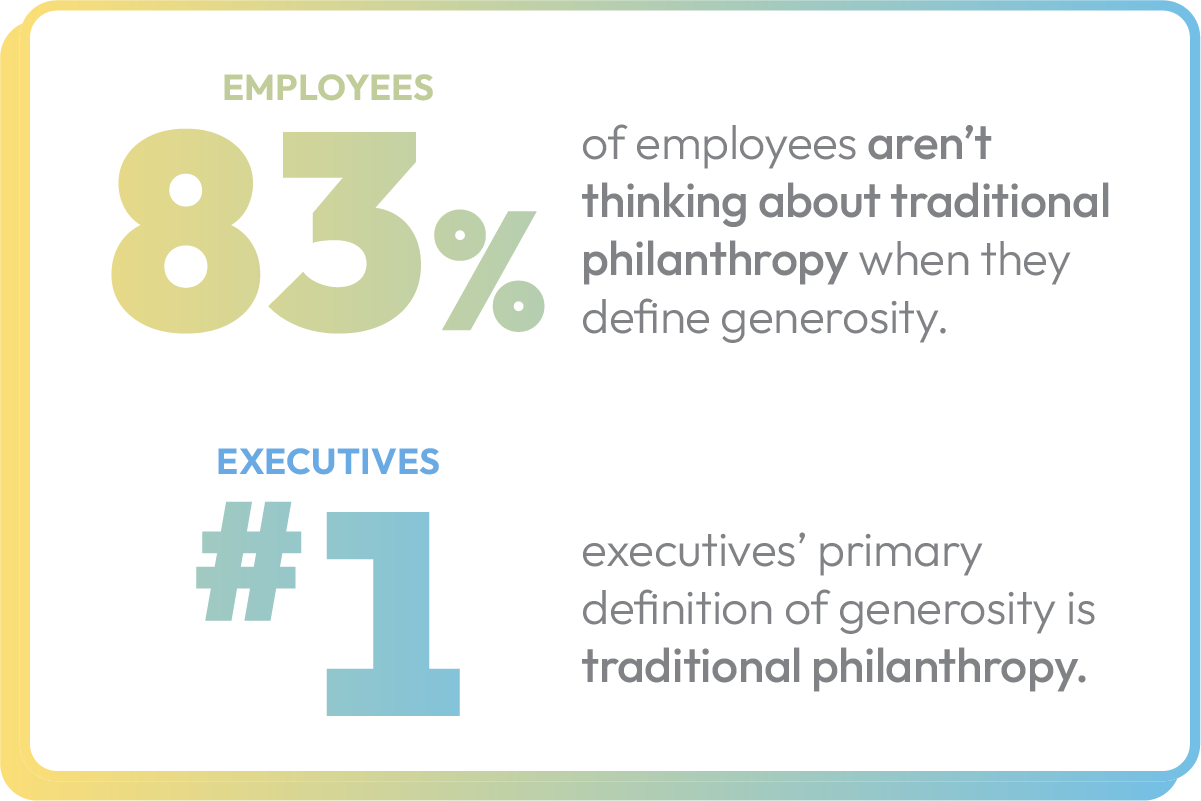
Employees clearly value internal generosity; they ranked exceptional employee care as the top definition (35%), followed by a positive, values-based company culture (26%) and business operations that positively impact the planet and people (22%). Notably, charitable efforts once again ranked lowest, with just 17% of employees viewing charitable donations and volunteerism as the primary form of business generosity.
When comparing these opinions to those of executives, a stark difference becomes apparent: executives prioritize more traditional forms of philanthropy, such as charitable contributions and volunteer outreach.
What’s more, we found that executives’ mindsets were reinforced by their financial investments, with 70% planning to increase their charitable donations and volunteer activities in the next year.
While employee care ranks first in importance among employees, and charitable outreach ranks lowest, for executives, this traditional generosity remains prominent—a clear indication of a significant misalignment between executive and employee preferences.
A key insight for executives to consider is that 83% of employees aren’t considering charitable outreach when it comes to business generosity. This suggests that traditional philanthropy was likely not the motivator for the 54% who pursued roles at companies they perceived as generous nor for the 48% who left companies they thought were ungenerous.
This isn’t a sudden shift in mindset. Employees have consistently communicated the same priorities year after year. The opportunity for executives now lies in fine-tuning business generosity investments to align more closely with employees’ expectations and to communicate frequently the full scope of their company’s generosity. Doing this correctly helps prevent key employees from seeking generosity elsewhere.
Explore further insights:


In Partnership with