2025 BUSINESS GENEROSITY REPORT:
Building Unshakeable Loyalty
In May 2025, goBeyondProfit and Georgia CEO surveyed 241 business leaders running companies and 1,000 employed adults across Georgia to examine perceptions and expectations regarding business generosity.
This year’s Business Generosity Report gives leaders an edge on how to utilize this moment to shore up employee loyalty—especially with key employees. When hiring rebounds, companies that master generosity today will be the destination top talent seeks—not the workplace they leave behind.
Summary of Findings:
Georgia Business Leaders Invest in Generosity at Record Levels but Miss the Mark on What Drives Real Returns
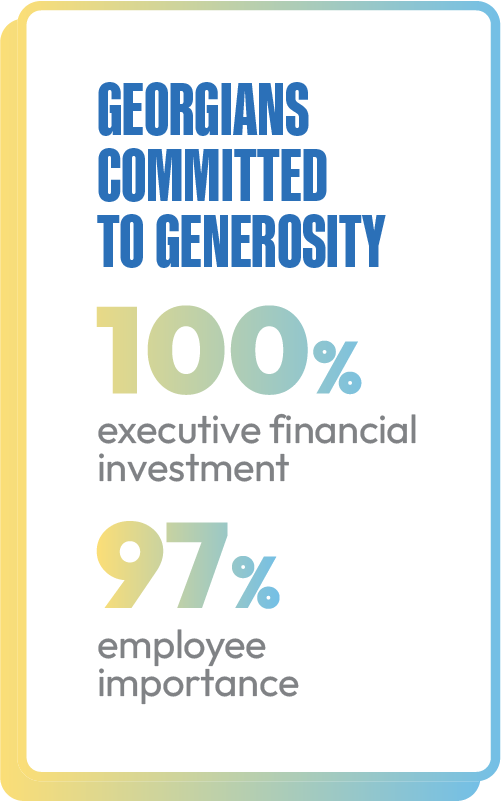
Overall, both executives and their employees agree that generosity drives business success. Executives report record levels of investment in generosity as well as measurable benefits—from increased employee satisfaction (68%) to financial gains (49%). Employees communicate that their expectations have skyrocketed—97% now consider business generosity fundamentally important in an employer. To learn more, click here.
More Than Ever, Getting Generosity Right Has Business Consequences
This year’s research proves generosity drives measurable business outcomes, but executives who understand what employees actually mean by generosity gain the real competitive advantage.
The data also reveals a critical misstep in what it means to be a generous company: while leaders attempt to meet expectations by heavily focusing on traditional philanthropy, employees clearly prioritize workplace generosity. What is the cost of this disconnect? Top talent has a wandering eye, quietly looking for a company that gets generosity right.
Similar to national data, 80% of employees in Georgia say they are satisfied with their job. Yet for business leaders trying to retain key employees, the data tells us that 37% are job hunting, including the 25% who are telling their boss they “absolutely love their jobs”. What exactly are they looking for?
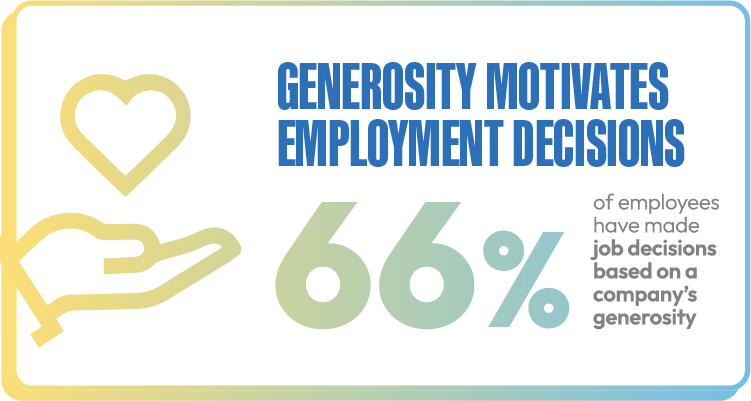
Turns out, generosity isn’t just “nice-to have” for culture—it’s driving decisions with serious business impacts. 66% of employees have made job decisions based on a company’s generosity; 1-in-3 actively pursued a job at a generous company; 1-in-4 have left jobs due to a lack of generosity; and 1-in-5 rejected offers from ungenerous companies. These aren’t one-time decisions, people are repeatedly making career moved based on generosity.
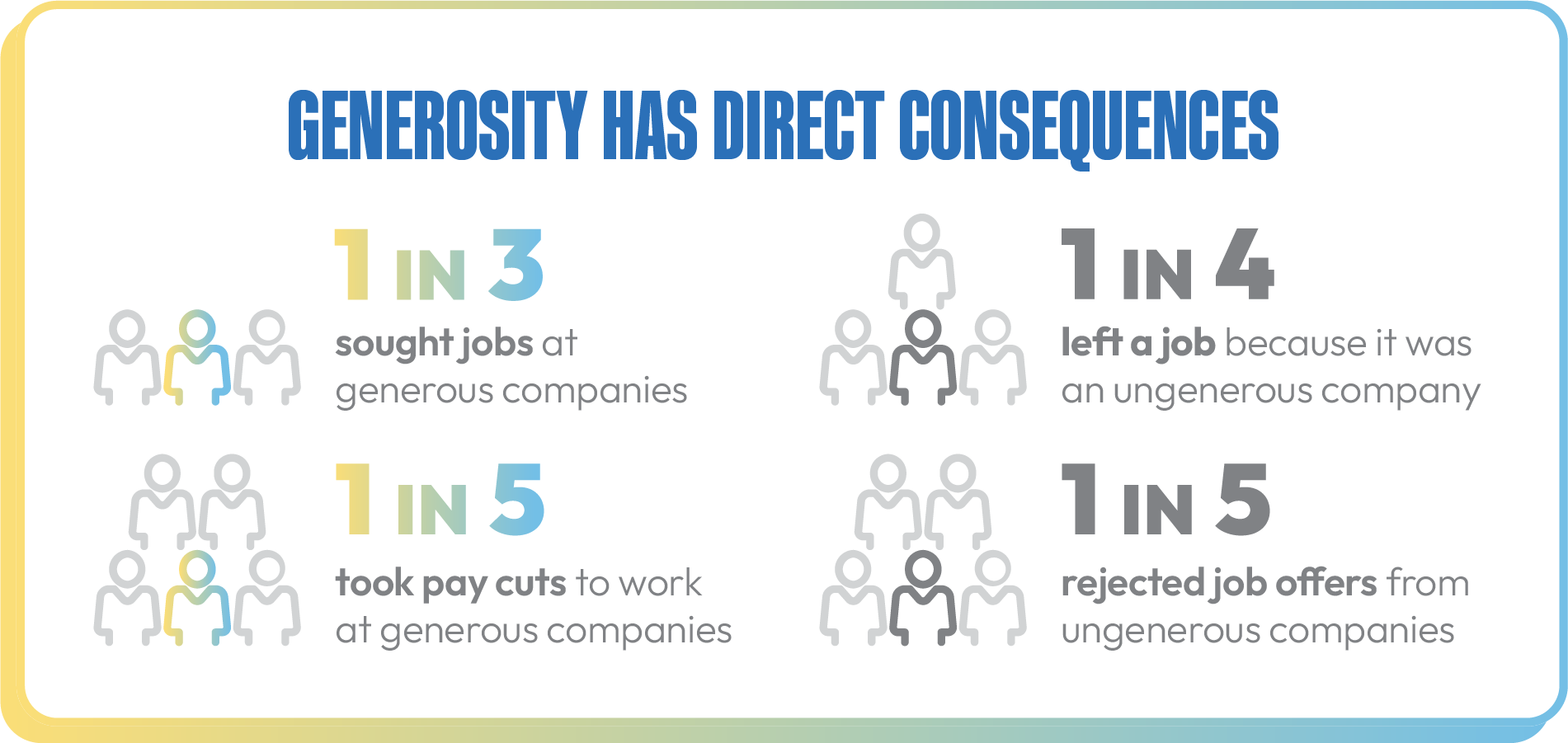
The data shows a clear warning: employees and candidates are choosing employers, rejecting job offers, and even accepting lower pay based on generosity. Companies deemed “ungenerous” risk losing talent and paying more for replacements. To learn more, click here.
Helping Executives Realize Substantial Benefits and Mitigate Costly Misalignment
This year’s research provides insights into how Georgians view business overall and their employer specifically. Only 41% of employed adults see business as a force for good, and just 38% think their CEO “walks the talk” when it comes to generosity.
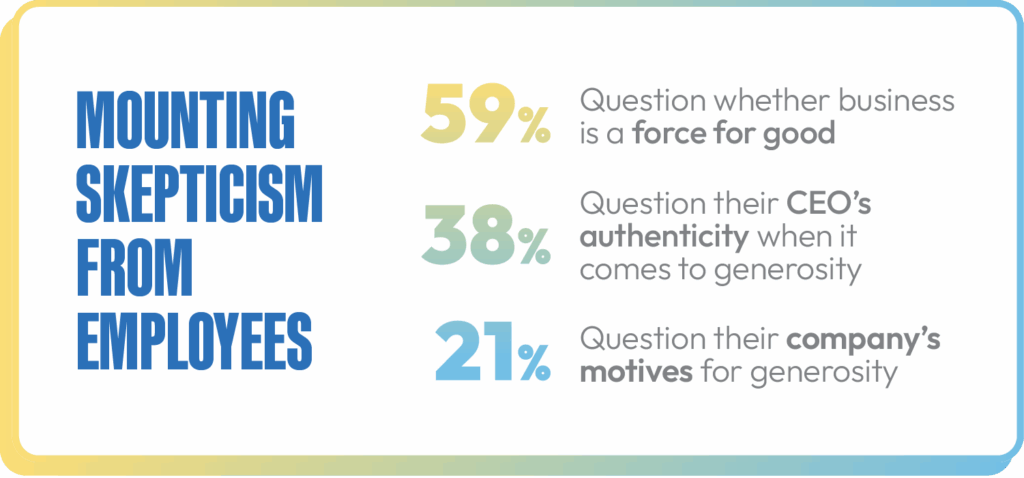
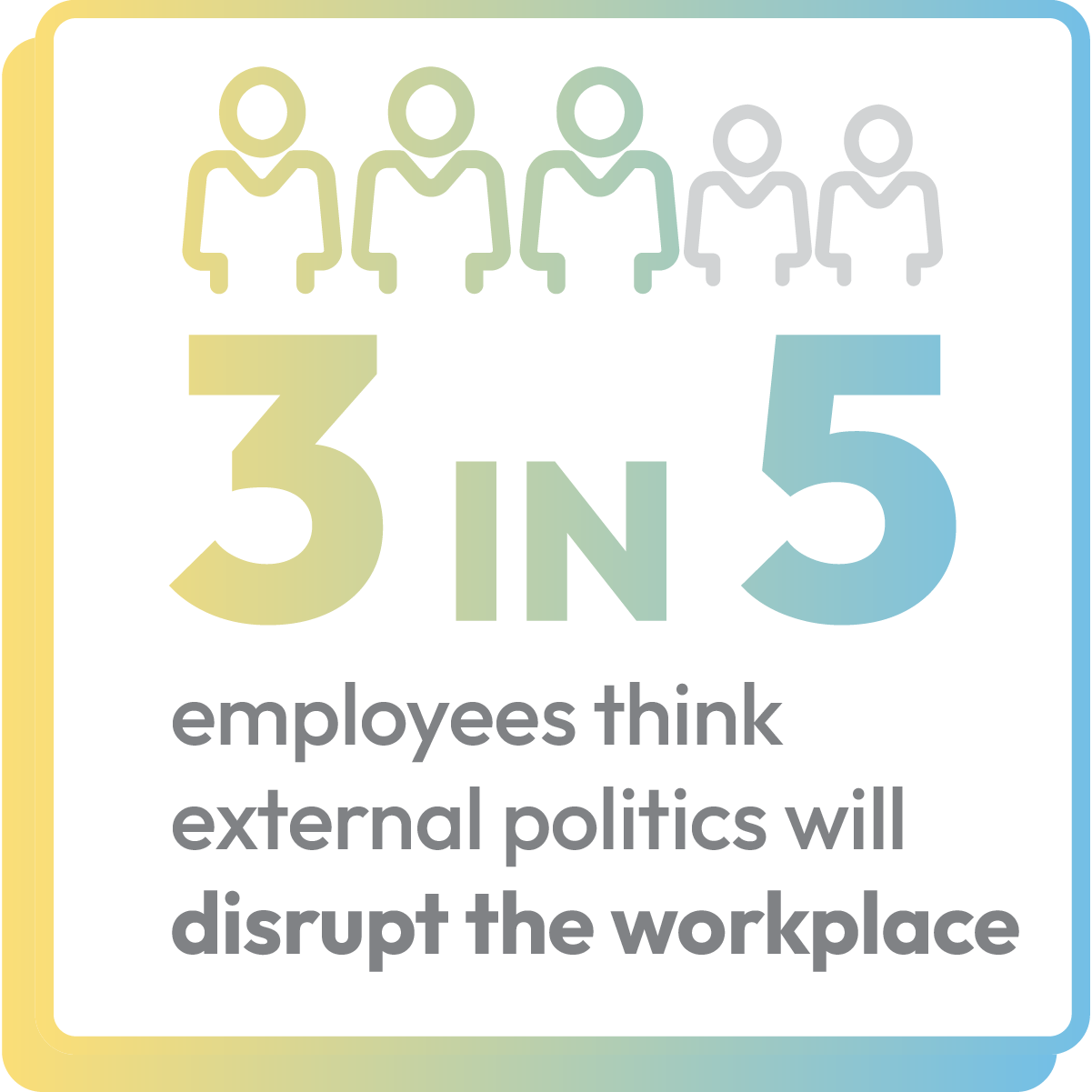
Added to this skepticism is a shared concern from employees and executives that the external political landscape will disrupt the workplace.
Even outside a national election year, most executives (56%) and a rising number of employees (60%, up from 45% in 2024) are wary of the impacts of external politics on both company policies and interpersonal relationships at work.
A notable 1-in-5 employees anticipate politics to be very disruptive, doubling the number from 2024. The combination of skepticism and political disruption creates an atmosphere ripe for employees to languish until they can find something new.
Thankfully, generosity efforts offer a positive, stabilizing force employees can experience daily. The first step involves recognizing that, fundamentally, executives and employees define generosity differently—this is the crux of the misalignment between how executives execute generosity and what employees genuinely value.
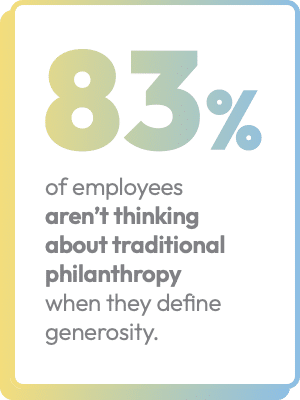
An astounding 83% of employees do not view charitable outreach as their primary definition of business generosity. However, executives consistently name this as their top priority, both in terms of what it means to be generous and where they invest. As a result, current business generosity investments do not align with what truly builds employee loyalty and enhances productivity. To learn more, click here.
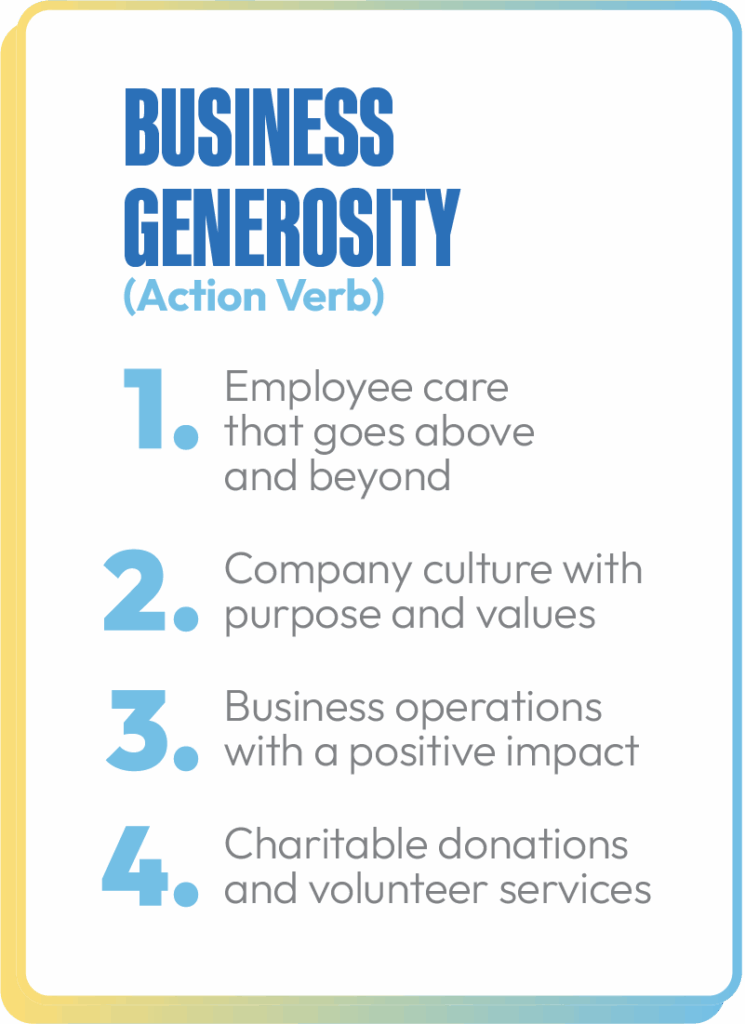
Success Requires a Strategic Shift: The Four Pillars of Modern Generosity
According to this year’s report, while executives have made steady progress, they have not fully adjusted their strategic focus. As a result, they risk key employees searching for companies that prioritize internal generosity.
The pillars of modern generosity include exceptional employee care, a transparent culture that embodies generosity, ethical operations, and meaningful community engagement—in that order. To learn more, click here.
While the markets roil with economic uncertainty, employees’ preferences have remained unwavering and the generosity they seek supports long-term business success. It turns out that getting generosity “right” may be the most reliable investment a business can make in 2025. This year’s Business Generosity Report offers executives a clear road map to success.
Explore further insights:


In Partnership with