Generosity by the Generations:
The Path to Improving Performance & Loyalty
Hiring has slowed and some CEOs are eager to use the moment to return to historic workplace dynamics to increase collaboration and productivity. New research from goBeyondProfit suggests that while employees may be stuck, doubling down on workplace generosity may be the key strategy for higher productivity and building loyalty that lasts when the economy shifts.
Data forewarns that employees are constantly evaluating their options—they seek out generous businesses and tend to switch when they find what they are looking for. The question isn’t whether employees will stay at a company—it’s whether they’ll want to and how hard they’ll work while they’re there.
This report offers leaders a clear plan for developing a workplace culture that enhances performance across generations and ensures a competitive advantage for the future.
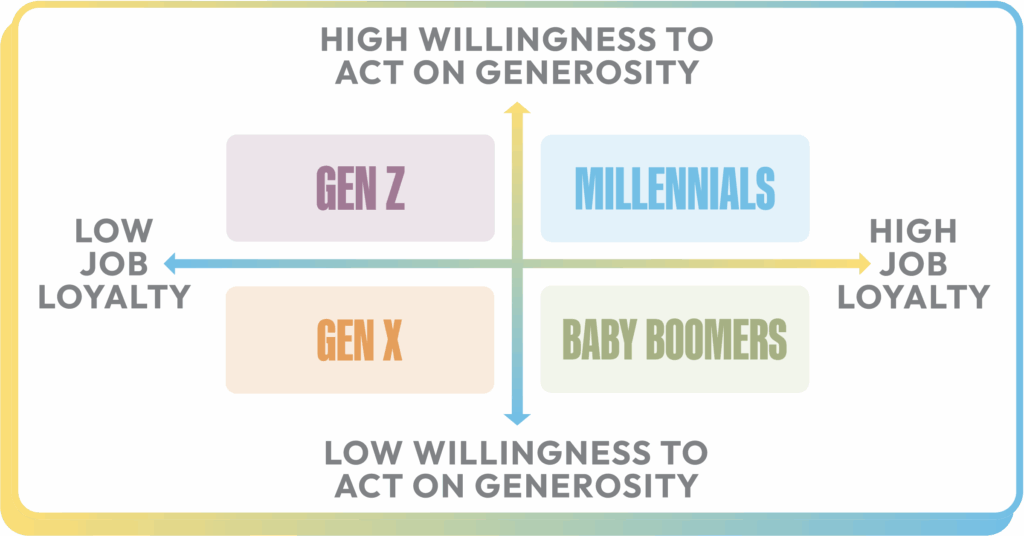
Who Has One Eye on the Door?
When it comes to who is seeking new opportunities, the data reveals a clear generational divide. Despite reporting high levels of satisfaction in their current role, younger generations are much more active in the job market, motivated by a desire to work for companies that genuinely demonstrate generosity.
Millennials and Gen Z are searching for more. At least 4 out of 10 Millennials (43%) and Gen Z (44%) are actively looking for jobs elsewhere. For these generations, their willingness to move is directly connected to the company’s generosity.
Gen Z takes action. More than any other generation, 43% of Gen Z have left a job due to a lack of generosity—a rate four times higher than that of Baby Boomers (10%) and nearly 20 points higher than their Millennial (25%) and Gen X (21%) counterparts. They are also much more likely (nearly 10 points) to have actively pursued a job at a generous company, as are their Millennial counterparts.
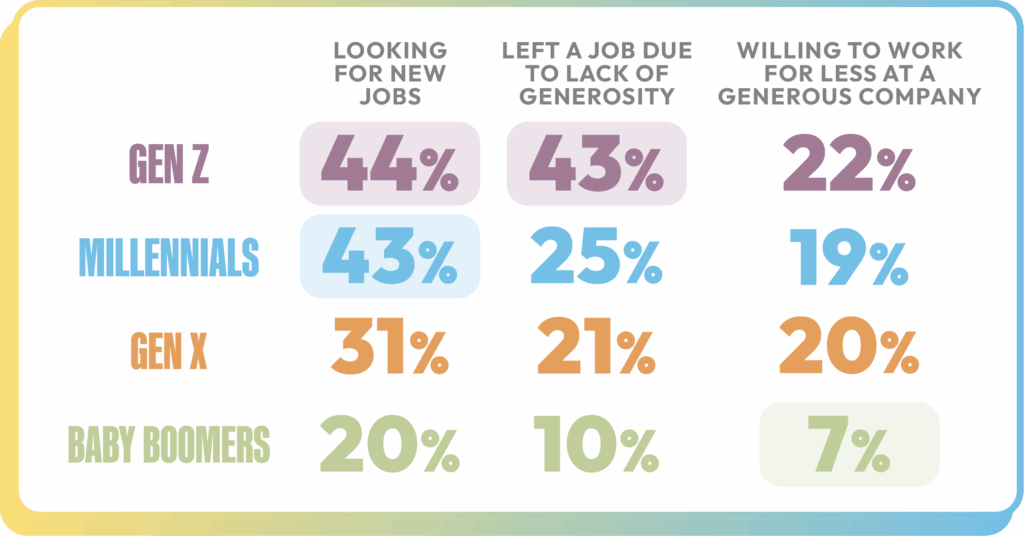
Willingness to sacrifice pay. Gen Z (22%), Millennials (19%), and Gen X (20%) are much more willing to take a pay cut to work for a generous company than Baby Boomers (7%).
Gen X and Baby Boomers are more settled. Older generations are much less likely to seek a new job, with only 31% of Gen X and 20% of Baby Boomers considering new opportunities. Additionally, 2 out of 3 Baby Boomers (65%) and 42% of Gen X have never taken career action based on a company’s generosity. For these groups, factors such as stability and experience may be more significant motivators.
Growing Skepticism About the Role of Business
The data reveals a clear and increasing skepticism about the role of business in society, with each subsequent generation showing more doubt. Baby Boomers hold the most positive view, while Gen Z holds the most skeptical view.
Baby Boomers have the highest level of confidence in business. Nearly half (47%) believe that business is a force for good. This perspective comes from a belief in authentic goodwill. Over half of Baby Boomers (58%) believe their employer’s generosity is driven by a “genuine desire to help others”—a sentiment held by far fewer members of other generations (15 points higher than others).
Gen Z and Millennials represent the rise of skepticism. Younger generations are far less convinced about the positive impact businesses have on the community. Gen Z is the most skeptical, with 64% believing that businesses do both good and bad things, followed by Millennials (50%) and Gen X (56%). Only 1 in 3 Gen Z employees believe that business is a definitive force for good.
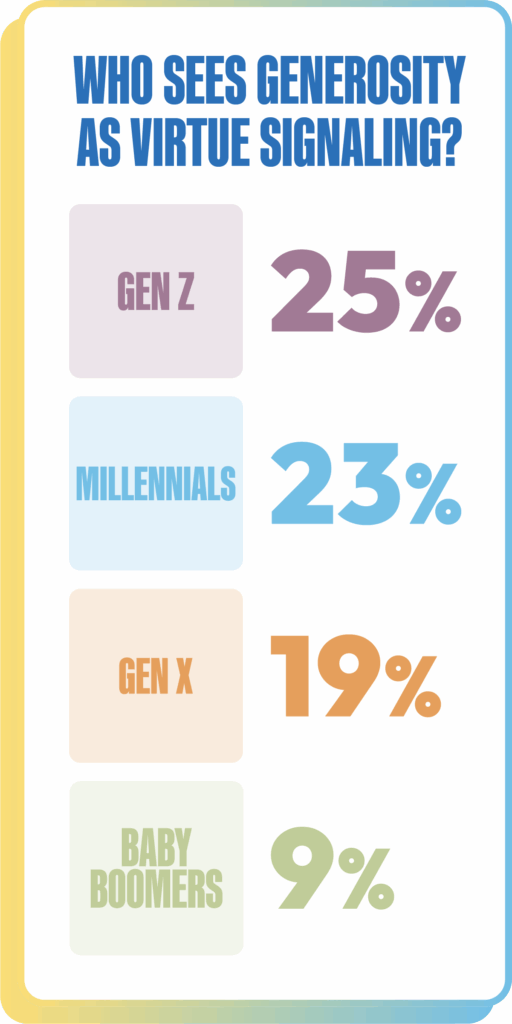
This skepticism also applies to their own employers’ motives. Compared to older generations, Gen Z (25%) and Millennials (23%) are more likely to believe their company’s generosity is driven by virtue signaling or political motives. This perspective is reinforced by their strong concern (63-69%) that external politics will disrupt the workplace.
Gen X hold a pragmatic view. Gen X holds a more pragmatic view of business. While they share the mixed perspective held by younger generations, they are most likely to believe their employer’s generosity is motivated by a simple, transactional reason: it’s “good for business” (40%).
The Truth About Flexibility
The data on flexible work challenges the popular narrative that younger generations are rejecting the return to the office. While flexibility remains a top request for everyone, the surprise lies in what they mean by flexibility and the level of importance across the generations.
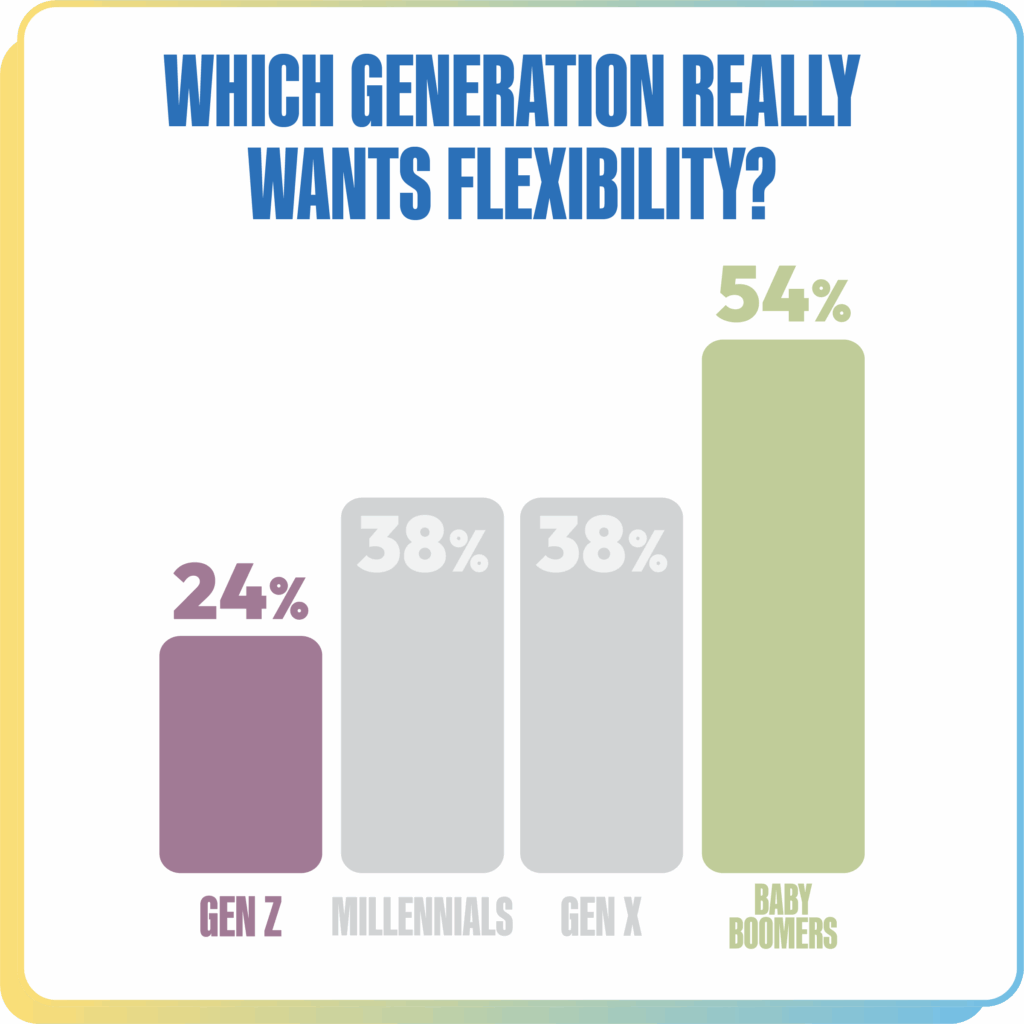
Baby Boomers value flexibility the most. An astounding 54% of Baby Boomers say a flexible work schedule is the most important way a company can show generosity to its employees. This is more than double the rate for Gen Z (24%), suggesting that flexibility is a primary motivator for older workers.
Gen Z’s priorities are split. Contrary to many stereotypes, Gen Z doesn’t prioritize flexibility above all else; this generation believes mental health support is just as important as flexible work, with both elements receiving a 24% rating as the most important demonstration of generosity.
Millennials seek balance. While 2 out of 3 Millennials believe flexibility is a very important demonstration of generosity to employees, they also consistently value a range of other benefits. For instance, they are more likely than their peers to elevate expanded maternal health services (56%), mental health support (64%), and childcare support (52%) as very important. This suggests that while flexibility is a crucial part of their work–life balance, these additional benefits provide the support they need to return to the office.
The Keys to a Strong Company Culture
While employees of all generations agree that accessible leadership is the most important element of a strong company culture, a closer look at what they also prioritize reveals interesting generational differences. Beyond a leader’s willingness to listen, different generations value distinct elements of their workplace environment.

Gen Z seeks a greater variety of perspectives. Gen Z’s priorities are clear—this generation highly values a workplace that reflects different backgrounds, experiences and points of view, ranking this as the second most important element of a generous culture. Not only is this important to them, but they also believe this diversity is a key element for their productivity.

Millennials and Baby Boomers value transparency. Both Millennials (20%) and Baby Boomers (22%) are most likely to prioritize transparent communication from their leadership, ranking it as the second most important element of a strong company culture.

Gen X seeks clarity and purpose. The second most important elements of a generous culture for Gen X are clear company values (19%) and a positive company purpose (19%). They want to see how these values and purpose impact their daily work and the world around them.
The Real Drivers of Productivity
According to employees, generosity investments are key drivers of that ever-elusive productivity. Our data suggests that the solutions may vary significantly across generations—what helps one group thrive might be less effective for another.

Flexible work is a top driver for most employees. Gen Z (23%), Millennials (27%), and Gen X (28%) agree that flexible work schedules are the single most important factor for boosting their productivity. Gen Z and Millennials both value office perks and believe these investments enhance their productivity. Overall, however, all generations desire more flexibility in terms of when and how they work.

Older generations seek more resources. For Baby Boomers, the top request is for additional resources such as equipment, personnel, and technology, with 37% stating that these resources would improve their productivity the most. This view is also shared by Gen X, with 27% making the same request.

Gen Z wants mental health support. While flexible work is important to Gen Z, their second most important driver for increasing productivity is mental health support (16%). This is a unique finding, as it’s nearly triple the rate compared to Gen X and Baby Boomers, emphasizing the importance of well-being for this generation’s performance.

Millennials balance high demands. Like Gen Z, Millennials also believe that mental health support (36%), expanded maternal health (22%), and childcare support (21%) would help them be more productive.
Making the Most of Your Community Impact
The data reveals a significant shift in how employees define business generosity. Most employees (83%) now define generosity as internal efforts, those focusing on employee care, company culture, or business operations. Only 17% see community outreach as the primary way a company can demonstrate generosity.
However, this does not mean community engagement has lost its resonance. Instead, it suggests that its impact is most significant with specific demographics, particularly Millennials.
Millennials are the generation most engaged by community outreach. They are more likely than any other generation (by 10+ points) to identify a wide range of community-focused initiatives as very important.
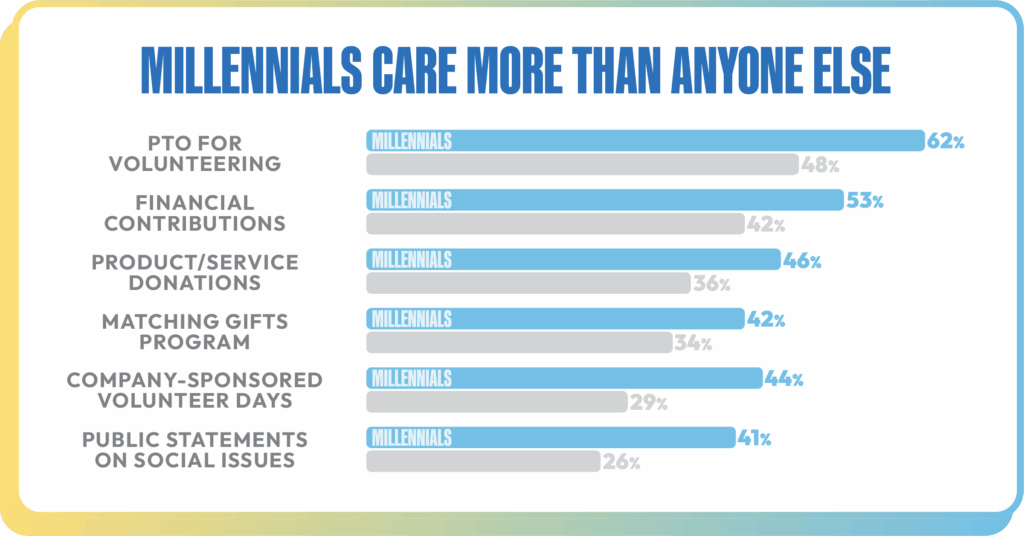
Across generations, PTO for volunteering remains a top request in terms of demonstrating generosity to the community, but there are some interesting differences:
- Baby Boomers are more likely to say that donations of products or services are the most important.
- Gen Z are twice as likely as any other generation to say that public statements on social issues are the most important.
While community outreach may not be the priority for most employees in terms of generosity, it is a critical motivator for Millennials. To maximize the impact of community outreach efforts, companies should focus on engaging this group through a diverse and visible range of initiatives.
Explore further insights:

In Partnership with