The Four Pillars of Modern Generosity: What Employees Actually Want
Employed adults primarily view business generosity through the lens of above-and-beyond employee care. Secondly, they seek a business culture that embodies generosity. Thirdly, they want to see businesses operating generously. Finally, authentic and holistic generosity is complemented by meaningful community engagement.
Year after year, 83% of employees select internal generosity as a top priority, with 60% emphasizing demonstrations tied explicitly to the employee experience.




Pillar One: Employee Care
A Top Priority Year After Year
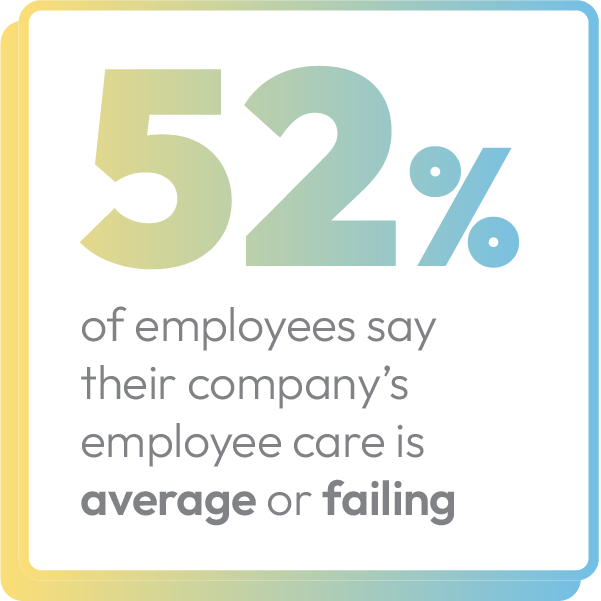
Unfortunately, over half (52%) of employees rate their current company’s employee care as average or failing. This dissatisfaction is largely due to a gap between what employers offer and what employees consider above-and-beyond care.
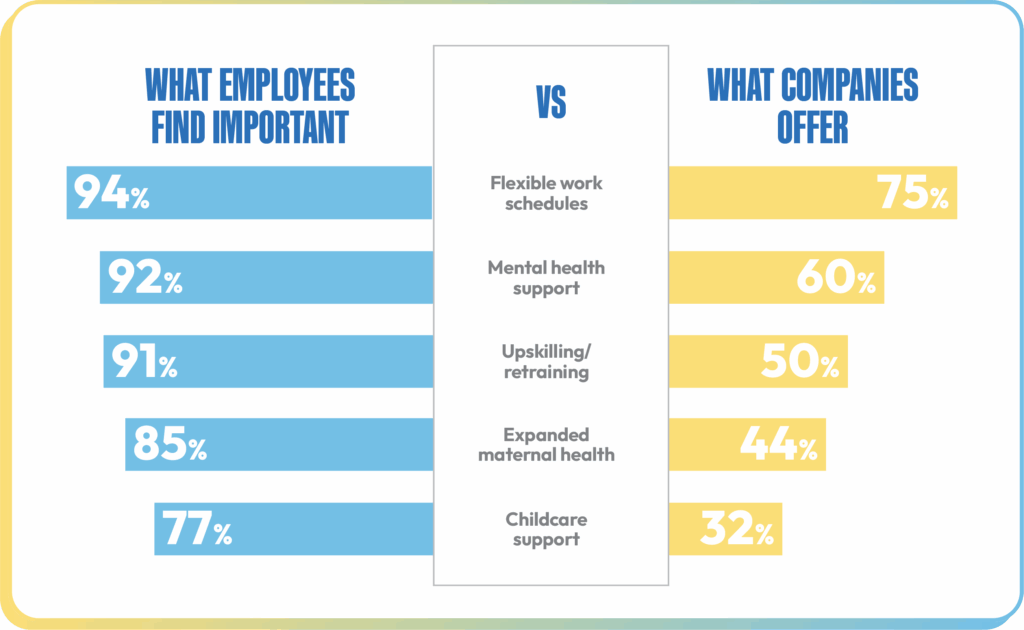
While employees consistently find all aspects of generosity related to employee care important, flexible work schedules (94%) and mental health support (92%) remain the most critical for the fourth consecutive year. In fact, a notable 1-in-3 (36%) specifically rank flexible work schedules as the single most important demonstration of generosity.
The Opportunity: Close the Care Gap
Impressively, 61% of executives plan to increase investment in employee care. This year’s Business Generosity Report data should influence where they direct that investment. With an average 36-point gap between what employees want and what companies say they currently offer, closing this gap presents the highest-impact investment opportunity for improving loyalty and productivity.
Trends to Watch:
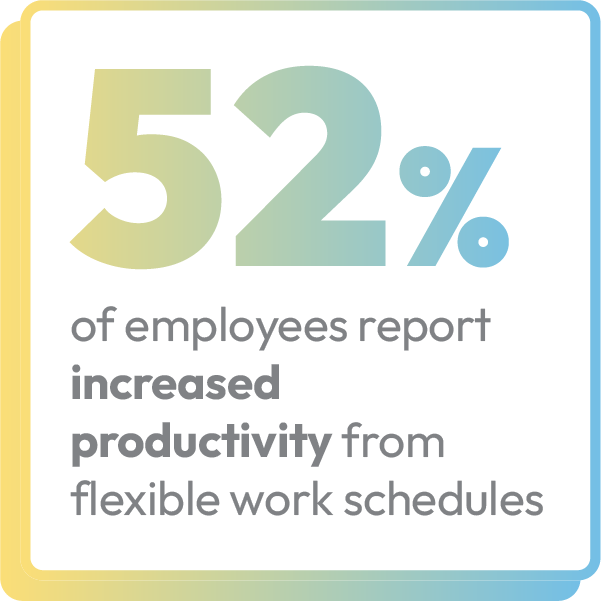
Flexible Work Schedule. Unsurprisingly, this remains a top priority for employees. Currently, 75% of executives offer increased flexibility (beyond just remote work—encompassing flexible shifts and hours as well as responsiveness to life’s demands). Its continued importance is highlighted by 52% of employees reporting that it also increases their productivity.
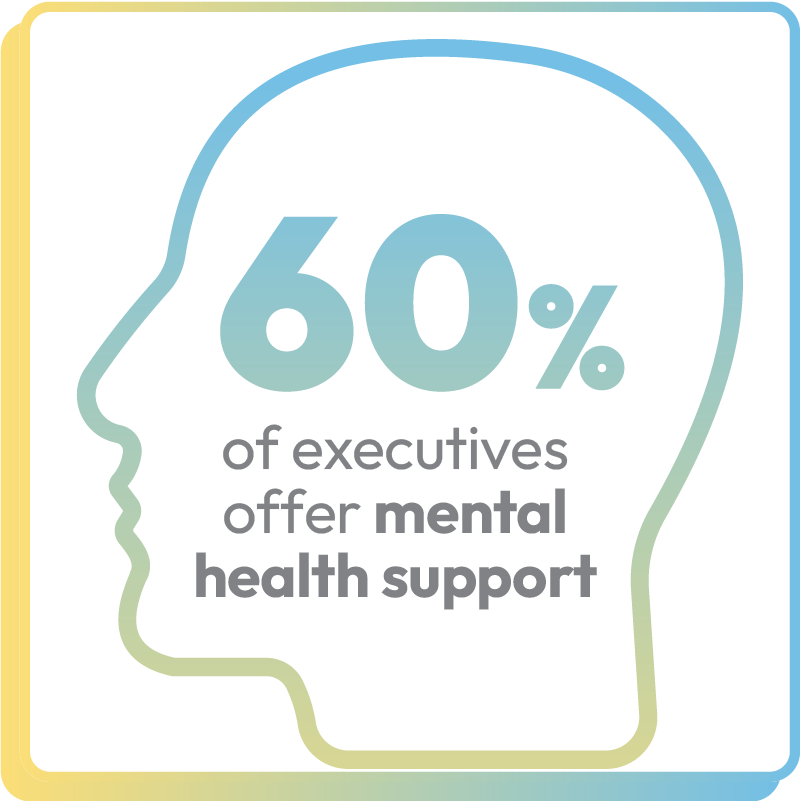
Mental Health Support. Employees’ request for greater mental health support continues, and executives are responding. The percentage of companies offering this has risen from 41% in 2023 to 60% this year.
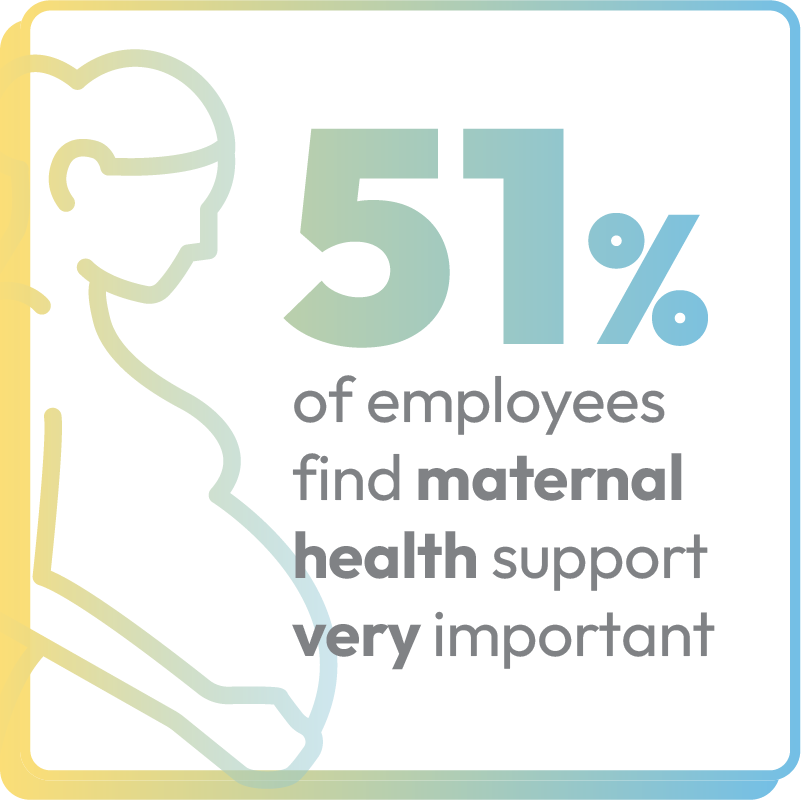
Maternal Health Support. For the second consecutive year, expanded maternal health support (covering pregnancy, prenatal and post-partum care, fertility, adoption, and surrogacy) maintains strong demand.Notably, 85% of employees consider it important with over half (51%) finding it very important—an 11-point increase from 40% in 2023.
Since only 47% of the workforce is women, this is clearly a priority for many employees. While the percentage of companies offering this has surged from 21% to 44%, there is still a significant 41-point gap—one of the largest disconnects presented in this report.
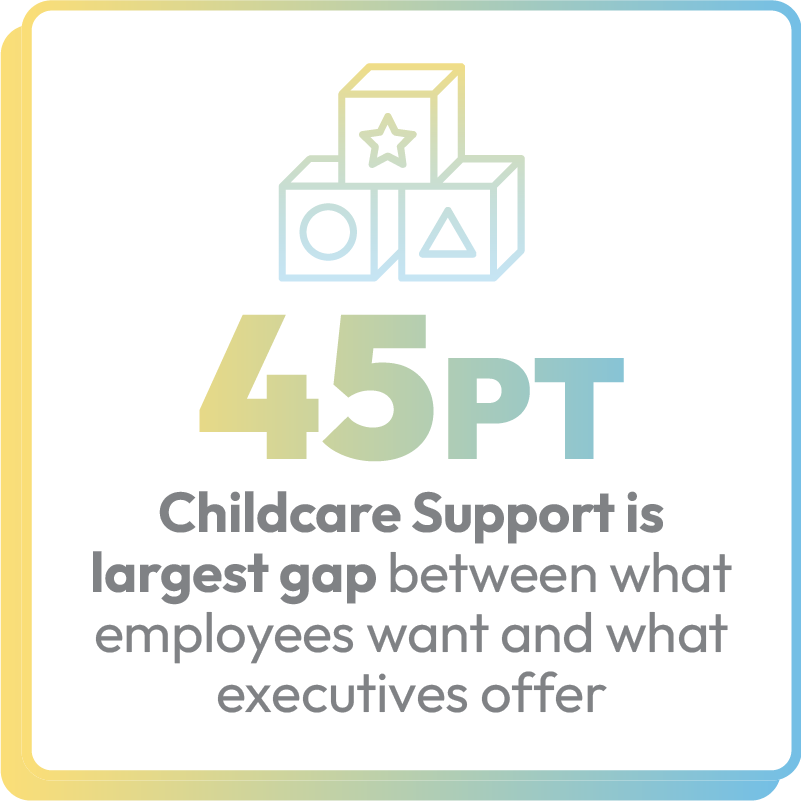
Childcare. The data reveals childcare support as an emerging priority. Nearly 4-in-5 employees (77%) find it important, including 43% who consider it very important. However, only 32% of companies offer this benefit—up from 12% in 2024, but a substantial 45-point opportunity gap still exists.
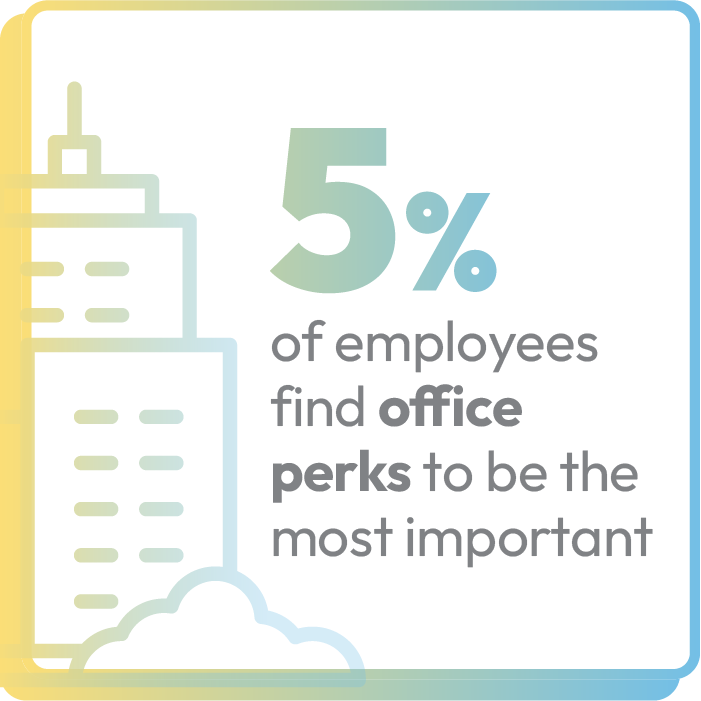
Cost-Benefit of Office Perks. While 55% of executives offer updated, collaborative workspaces with great perks, this employee care option ranks at the bottom of employee requests, with only 5% citing it as most important. This indicates a significant disconnect between high executive investment and what employees perceive as most valuable.
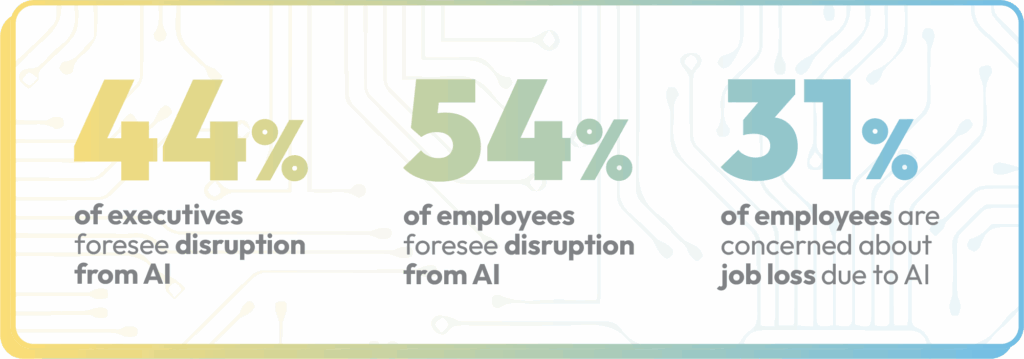
Upskilling/Retraining. 91% of employees find upskilling and retraining important. This demand may be tied to the growing influence of Artificial Intelligence (AI). Both executives (44%) and employees (54%) anticipate that AI will disrupt the workplace this year, with 31% of employees specifically concerned about job loss due to consolidation, streamlining, and automation. Notably, executives report decreasing investment in this area, dropping over 10 points from 61% last year to 50% this year.
For executives who read these priorities and believe their investments are well-positioned, consider closing the perception gap by communicating generosity efforts consistently. Share the good news, often.
Pillar Two: Company Culture
Communication and Access Matter Most
In shaping company culture, employees consistently value transparent communication and approachable leadership more than elaborate office amenities. The improvements employees seek often require no financial investment but deliver significant productivity gains.
Across the board, employees place high importance on all aspects of a generous company culture (89–96%). In fact, they are 10 points more likely to say that aspects of company culture are very important than they are to say the same about aspects of employee care (59% average vs. 49% average).
While excellent employee care remains their top priority, it is important to note that generous culture concepts resonate deeply and are incredibly important to employees.
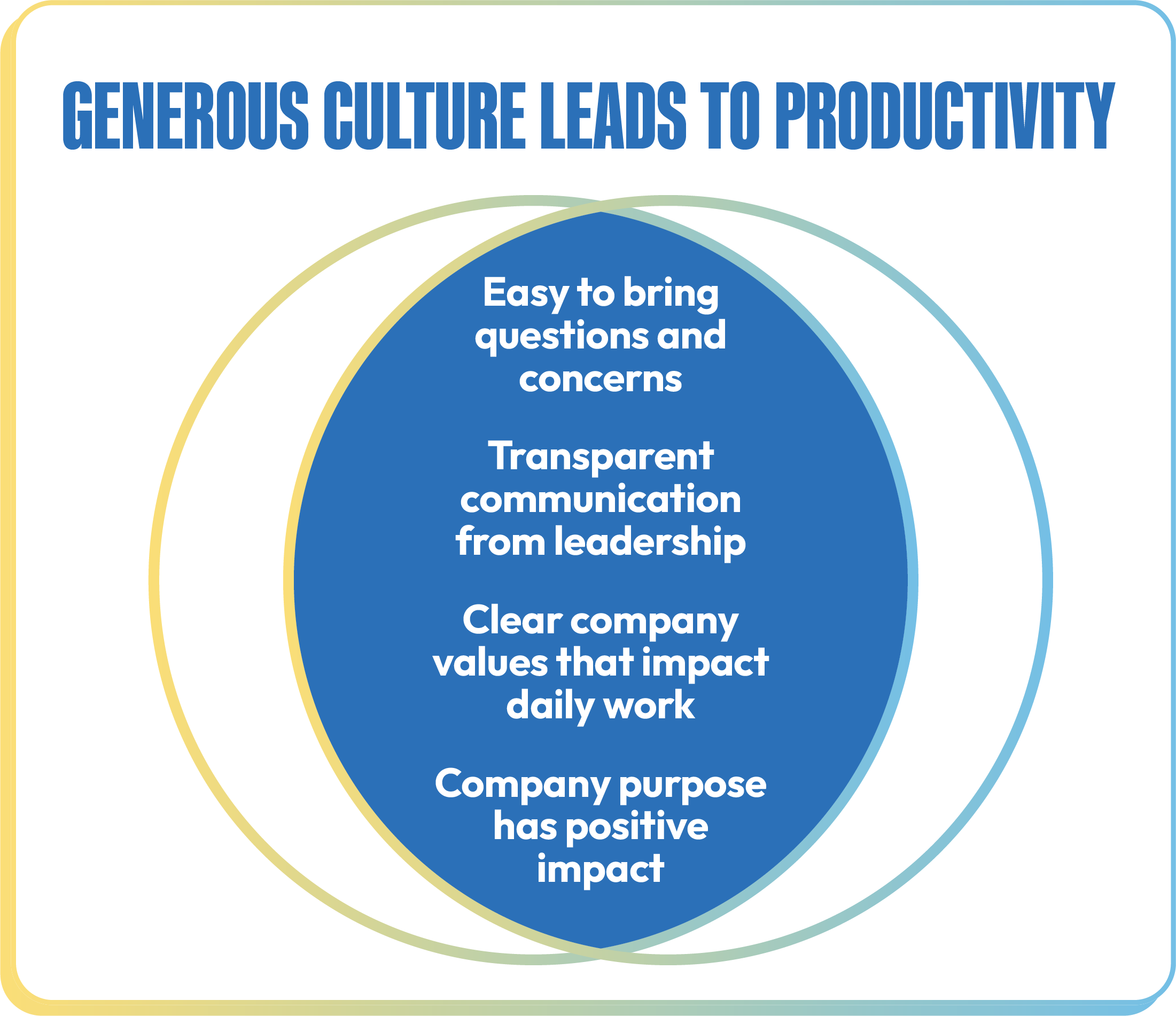
The good news? Getting this right directly correlates with increased employee productivity. When asked what aspects of a culture would boost their productivity, employees’ responses were nearly identical to their general cultural priorities, reinforcing the direct business benefit.
Trends to Watch:
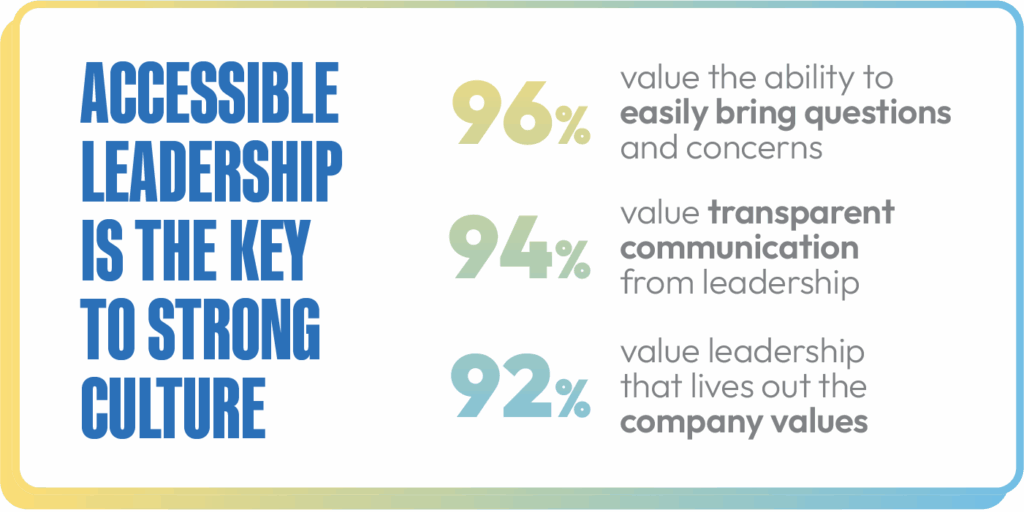
Accessible and Visible Leadership. When it comes to the most important elements of a generous company culture, employees emphasize their desire to be heard.
Their top priorities include the ability to easily bring questions and concerns (96%), transparent communication from leadership (94%), and leaders who consistently “walk the talk” and embody company values (92%). What gets modeled gets believed.
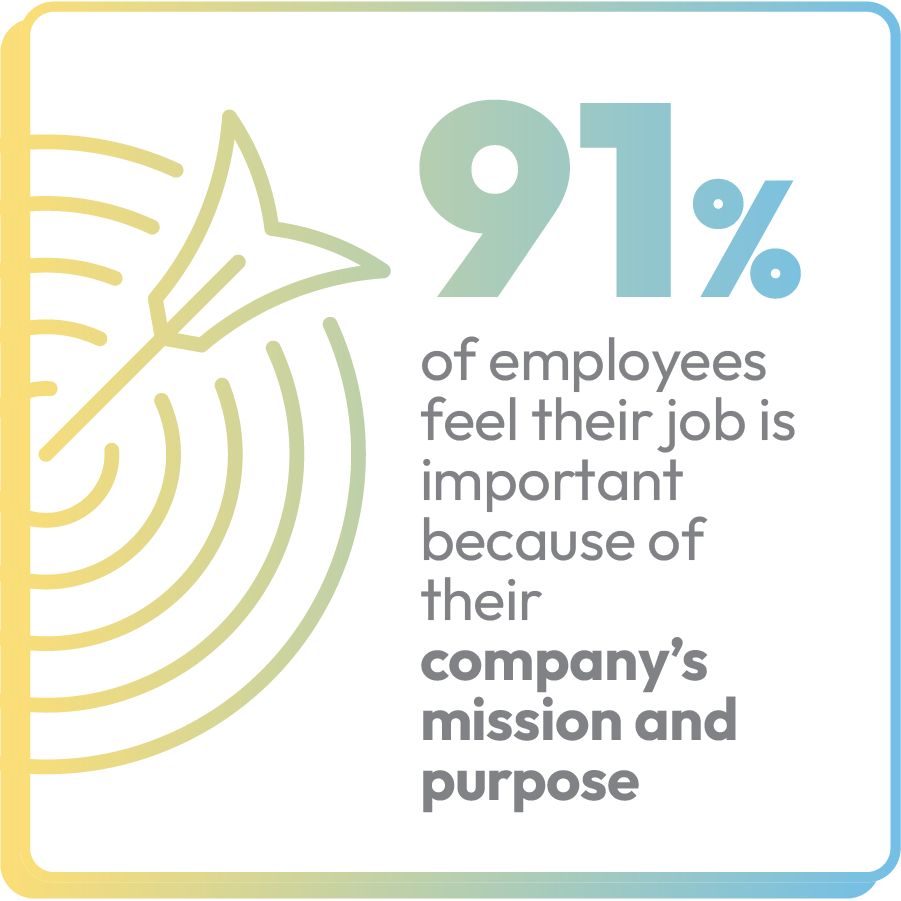
Company Purpose and Values. Employees are increasingly looking for companies with a purpose that makes a positive impact (94%) and clear values that impact their daily work (94%). This aspect has seen a 3-point increase in importance since 2024.
Fortunately, when companies succeed in this, 91% of employees feel their job is important because of their company’s mission and purpose. And employees who say they are strongly connected to their company’s mission and purpose are much less likely (by 32 points) to look for a new job. While purpose and values initiatives may seem familiar to many companies, their power lies in making them actionable and connected to day-to-day work.
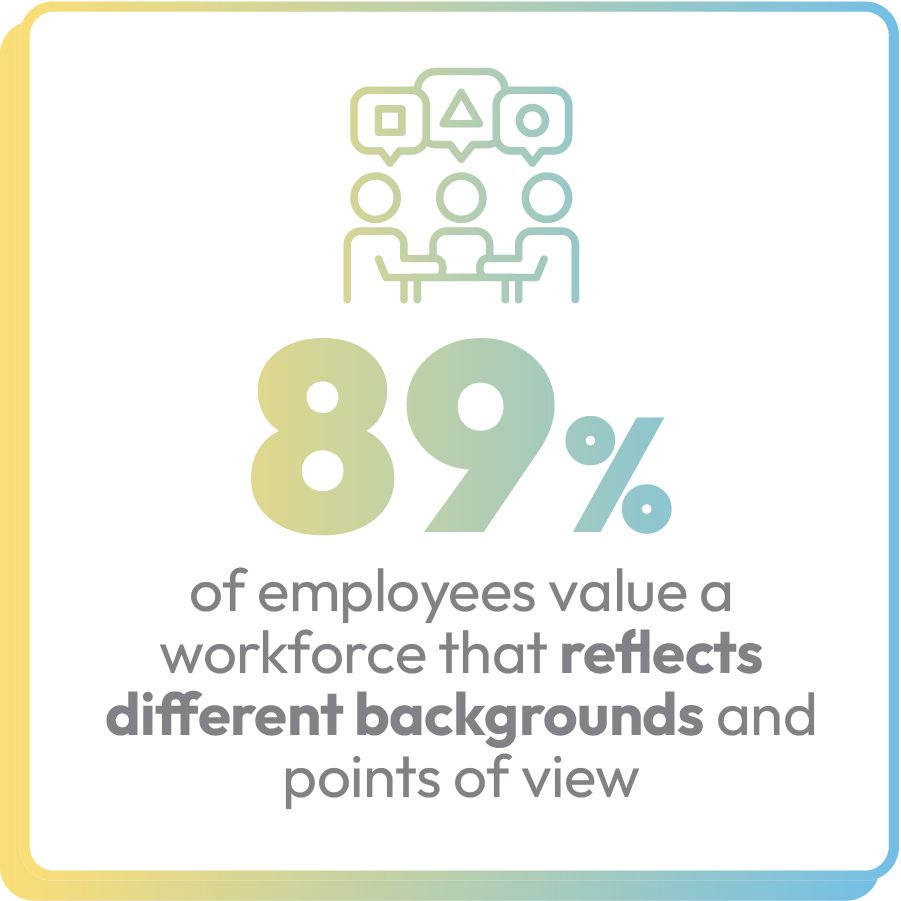
Workforce Reflecting Different Backgrounds and Points of View. Over the past three years, there has been a steady increase in the number of employed adults who believe that a generous company should foster a workforce that reflects different backgrounds, experiences and points of view (rising from 84% in 2023 to 89% in 2025). Regardless of the specific terminology, employees find this aspect of culture increasingly vital.
Rising Concerns Over Politics Playing Out in the Workplace
Even outside a national election year, the potential for the external political landscape to disrupt workplaces has significantly increased (by 15 points). For context, this year’s Business Generosity surveys were conducted in May 2025. At this point in the year, most executives (56%) expressed concern that external politics will disrupt their workplace, and employee concern exceeds that of their leadership, with 60% expressing concern (up from 45% in 2024).
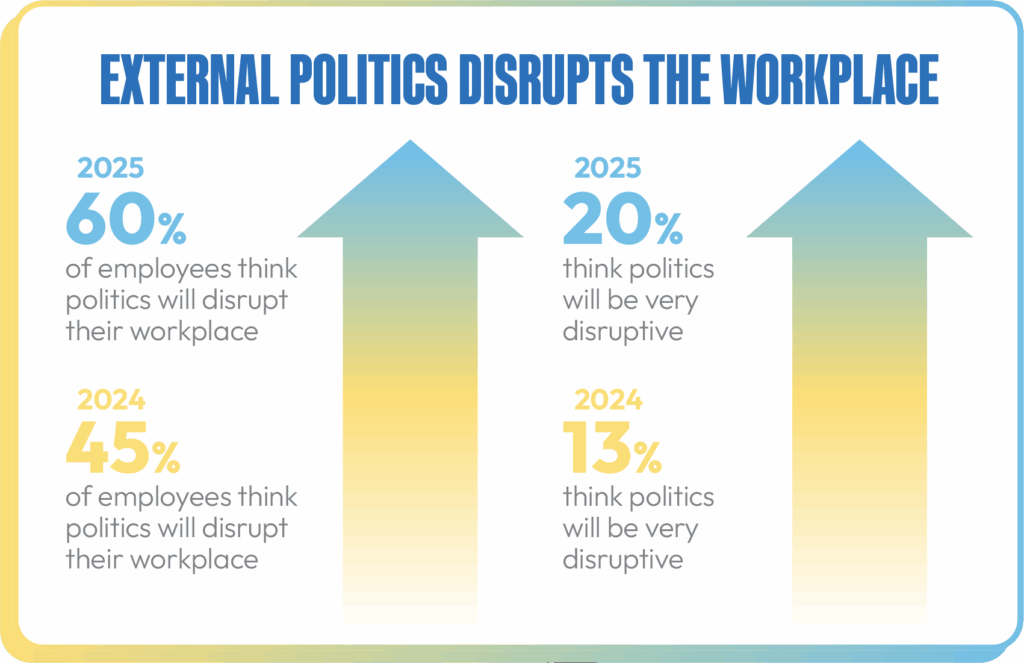
A notable 1-in-5 employees anticipate politics to be very disruptive, doubling the number from 2024.
What specifically concerns them? For many, it is the impact of external politics on the core business: 47% say current policies are negatively impacting their business.
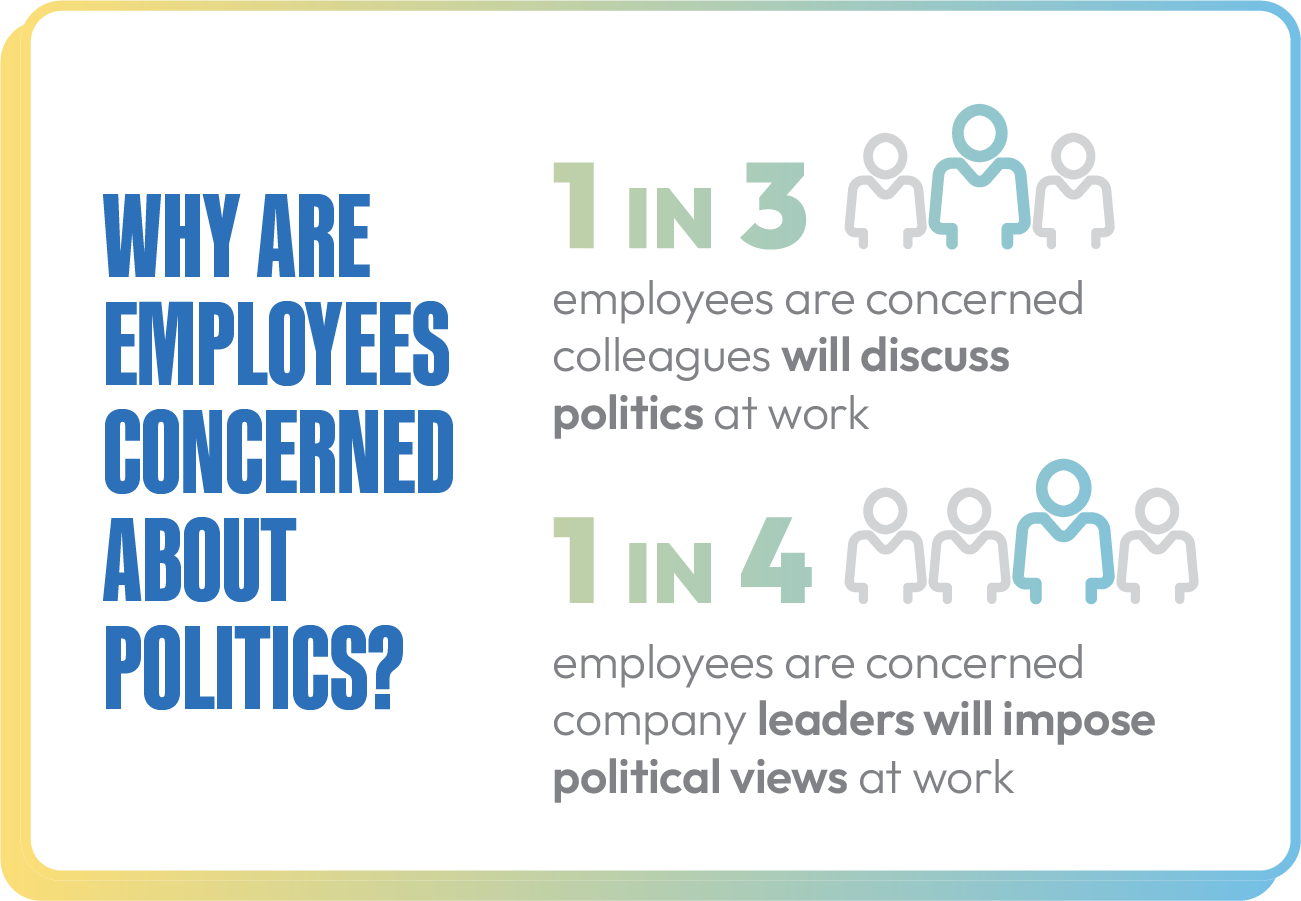
However, for an alarming number of people, political tension at work is the primary worry: 43% believe company policies or decisions are being influenced by external politics, 1-in-3 are concerned about colleagues discussing external politics at work, and 1-in-4 are concerned about company leaders imposing political views at work.
Pillar 3: Business Operations
Ethics Lead
While employees prioritize generosity in employee care and company culture, their next area of focus is generosity in business operations—before considering charitable outreach.
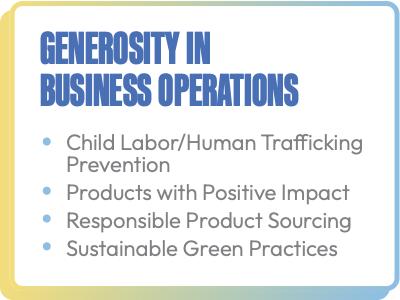
But what does it mean to “operate generously” in an employee’s view? We asked respondents to evaluate several key examples:
Ethics Matter More Than Expected
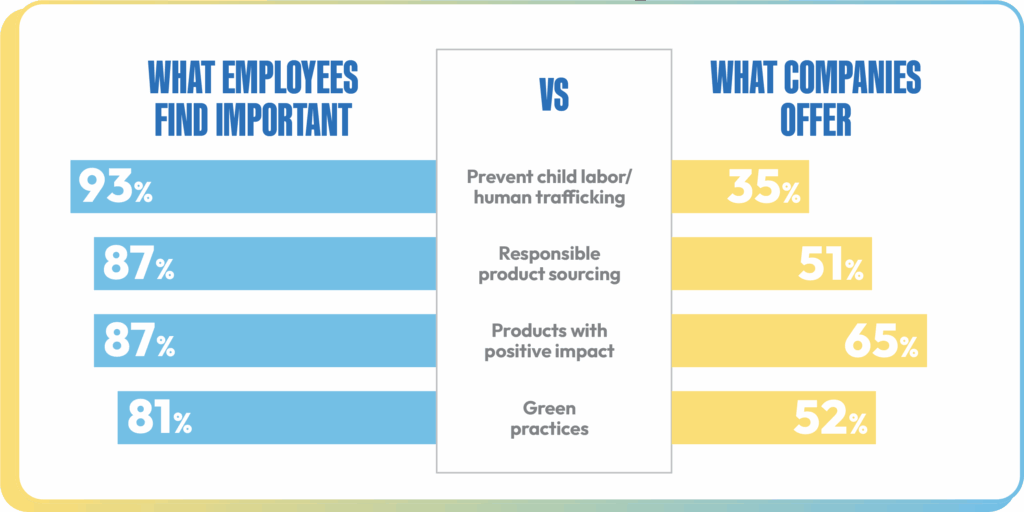
In terms of importance, employees rated these operational aspects highly (81% – 93%). However, supply chain ethics consistently topped the list. Not only do 93% of employees care about supply chain ethics, but 47% rank child labor or trafficking prevention as their most important operational concern. Despite this critical employee focus, only 35% of companies currently address this.
The Operations Opportunity
The good news is that over half of executives are already operating their businesses generously, with some of the smallest gaps between employee expectations and executive implementation among all our measures of generosity. Given the high level of importance employees place on ethical and sustainable operations, executives already focused on these areas have a distinct competitive advantage. Transparently communicating these efforts to both employees and customers can significantly enhance perception, trust, and loyalty.
Pillar 4: Community Engagement
The New Model is Employee-Driven Generosity
Our data clearly indicates that the majority of employees hope to see generosity reflected throughout the business—both internally and externally.
Regarding specific expressions of generosity to the community, traditional charitable outreach remains highly important (67%–89%). However, these particular expressions of generosity ranked lowest in overall importance compared to examples of employee care, company culture, or business operations.
The data strongly suggests it is time to rethink traditional community engagement. The next frontier is all about empowering employees in their personal generosity.
Trends to Watch:
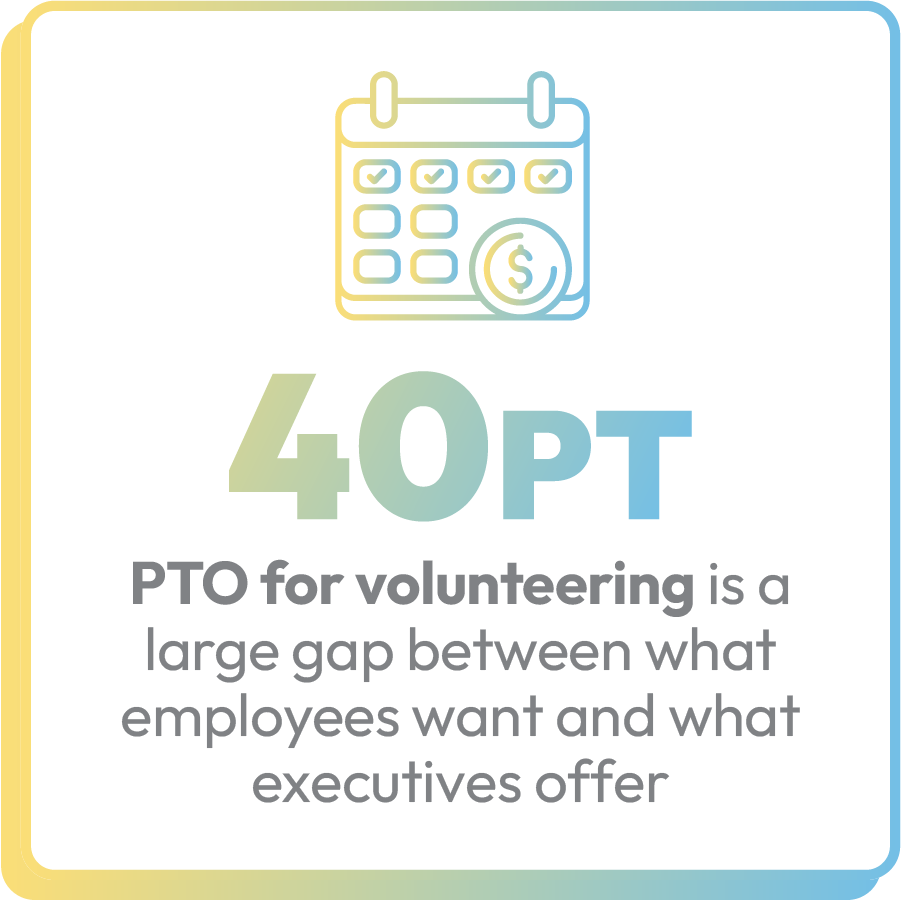
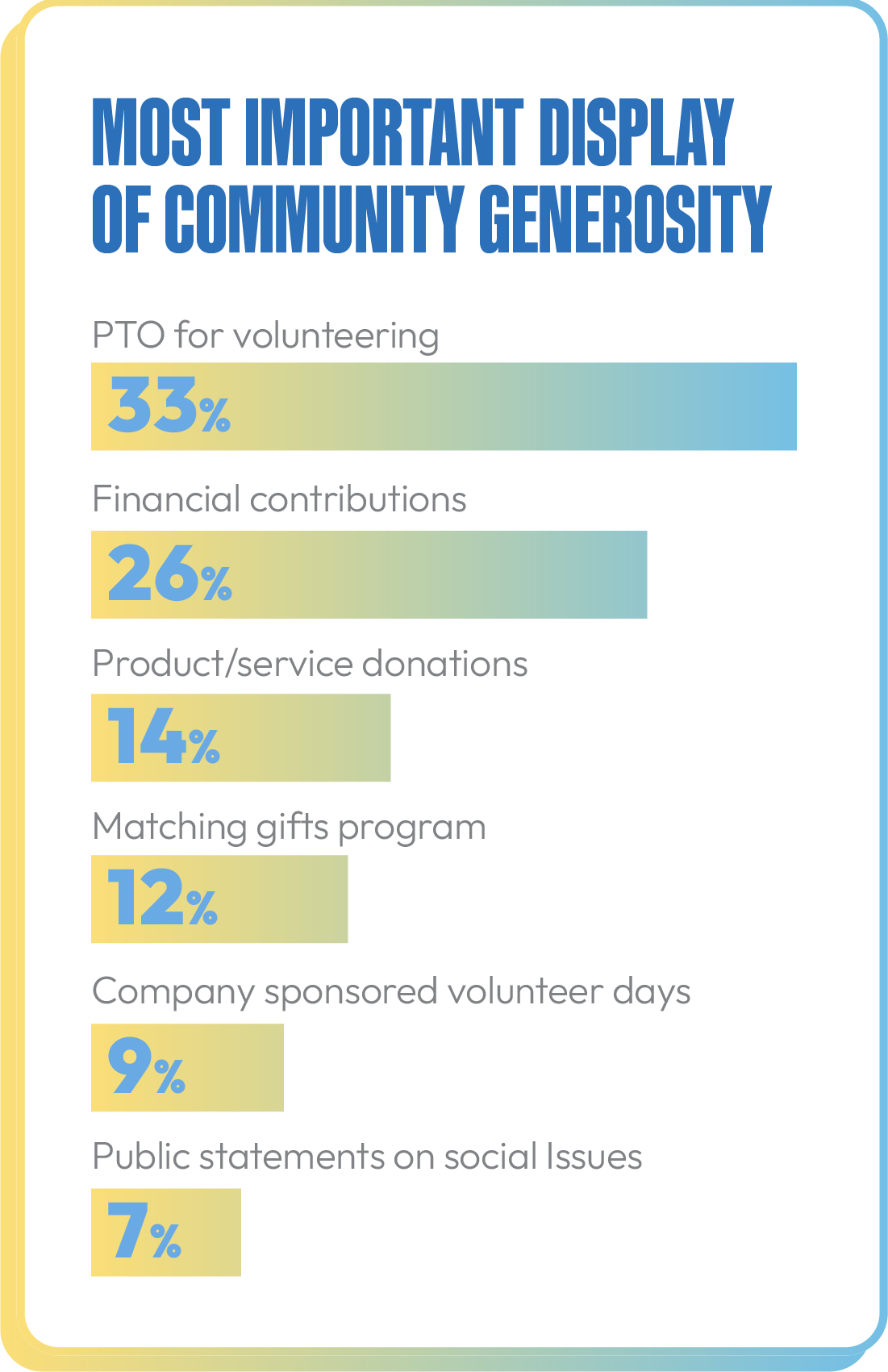
Biggest Opportunity: PTO for Volunteering. Paid time off for volunteering is not only the most important demonstration of community generosity for employees, but it also represents one of the largest disconnects with employers. Individual choice regarding where they serve is highly important (87%) to employees; it was the top answer (33%) when they were asked to identify what is most important.
Surprisingly, less than half (47%) of executives offer this benefit, creating a substantial 40-point execution gap. Executives continue to fund company-sponsored volunteer days (57%), which only 9% of employees consider the most important.
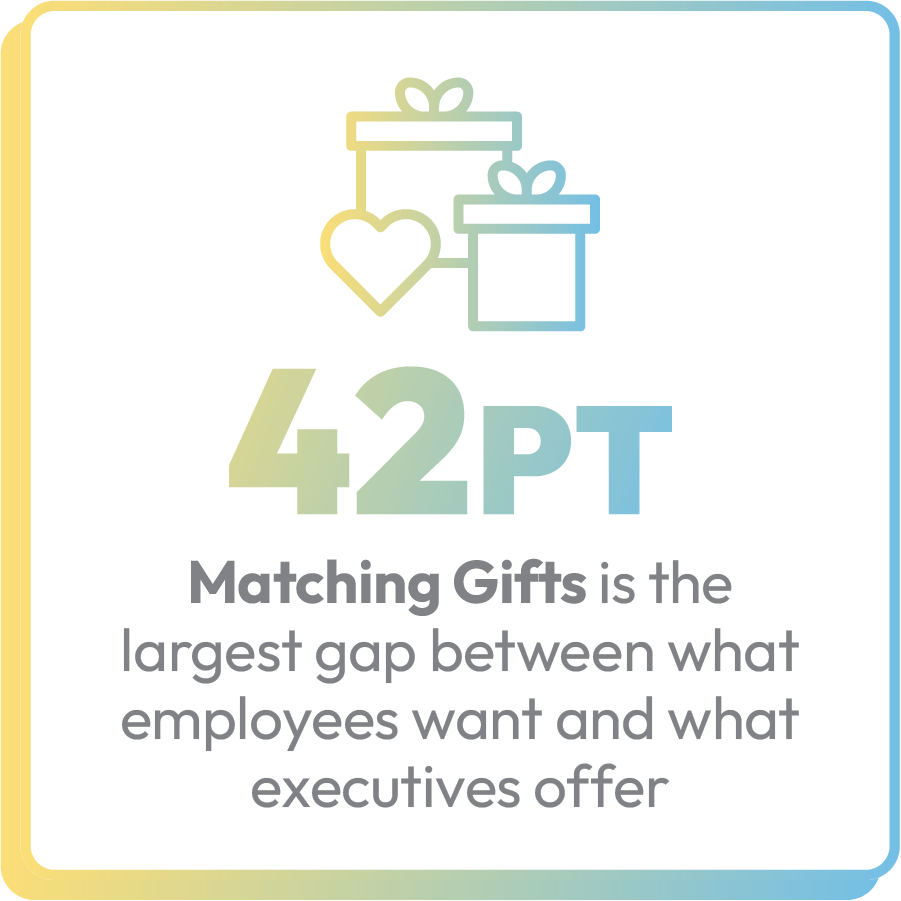
Empower Giving: Matching Gifts. Additionally, a matching gifts program, where employers contribute donations to organizations and causes supported by their employees, represents a significant missed opportunity. 77% of employees find this important, yet only 34% of companies offer such programs—this represents the most significant gap in this category.
A recent report from the Giving USA Foundation found that charitable donations have increased by 3.3%, with individuals accounting for the vast majority of those. It is evident that employees want to be charitable and are seeking employers that support their generosity endeavors.
Financial Contributions: A Solid Choice. For the past seven years, direct financial contributions have garnered the highest overall importance score within the community-focused generosity category (89%). They also exhibit the smallest gap in executive adoption, suggesting that companies generally prioritize this aspect effectively.
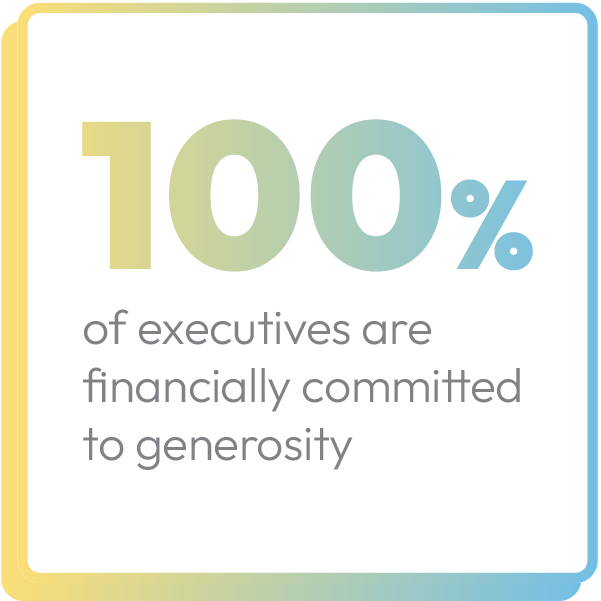
While 100% of executives report making financial investments in business generosity, and 73% state they are currently making charitable contributions, 27% of leaders have yet to realize that charitable giving is a given.
Explore further insights:

In Partnership with